
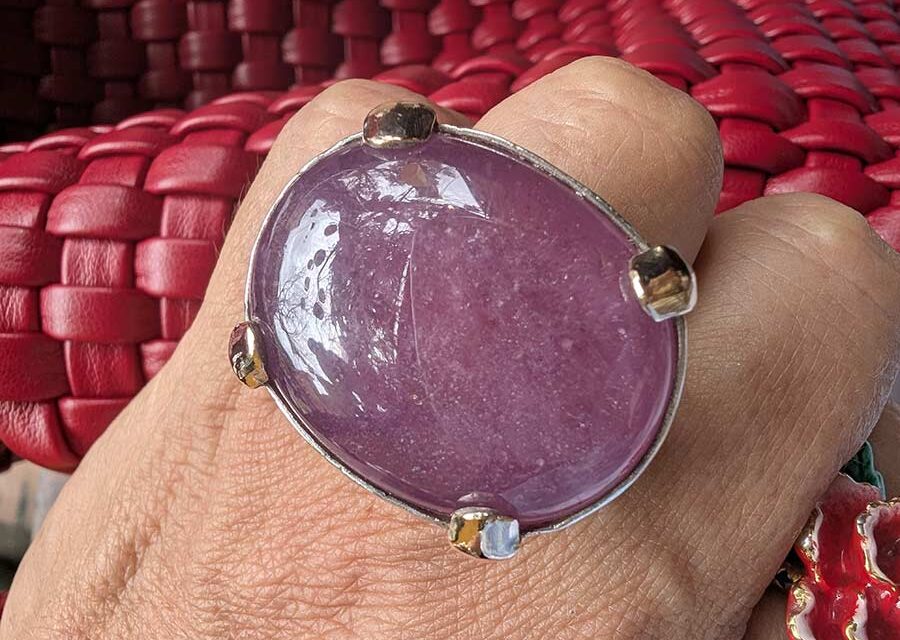
You didn’t just buy a ring.
You encountered it.
You noticed it ten days ago.
You hesitated.
You tried it on.
You walked away.
You came back.
You kept being pulled toward it.
That already tells us something: this wasn’t a casual purchase. It wasn’t “oh that’s pretty.” It was a quiet, repeated attraction — the kind that usually means something inside you was listening.
So why, once you finally wore it all day, did your confidence disappear instead of grow?
That’s the real question.
What you’re describing isn’t shallow, silly, or irrational. It’s actually very human — and very familiar to anyone who buys with instinct rather than pure logic.
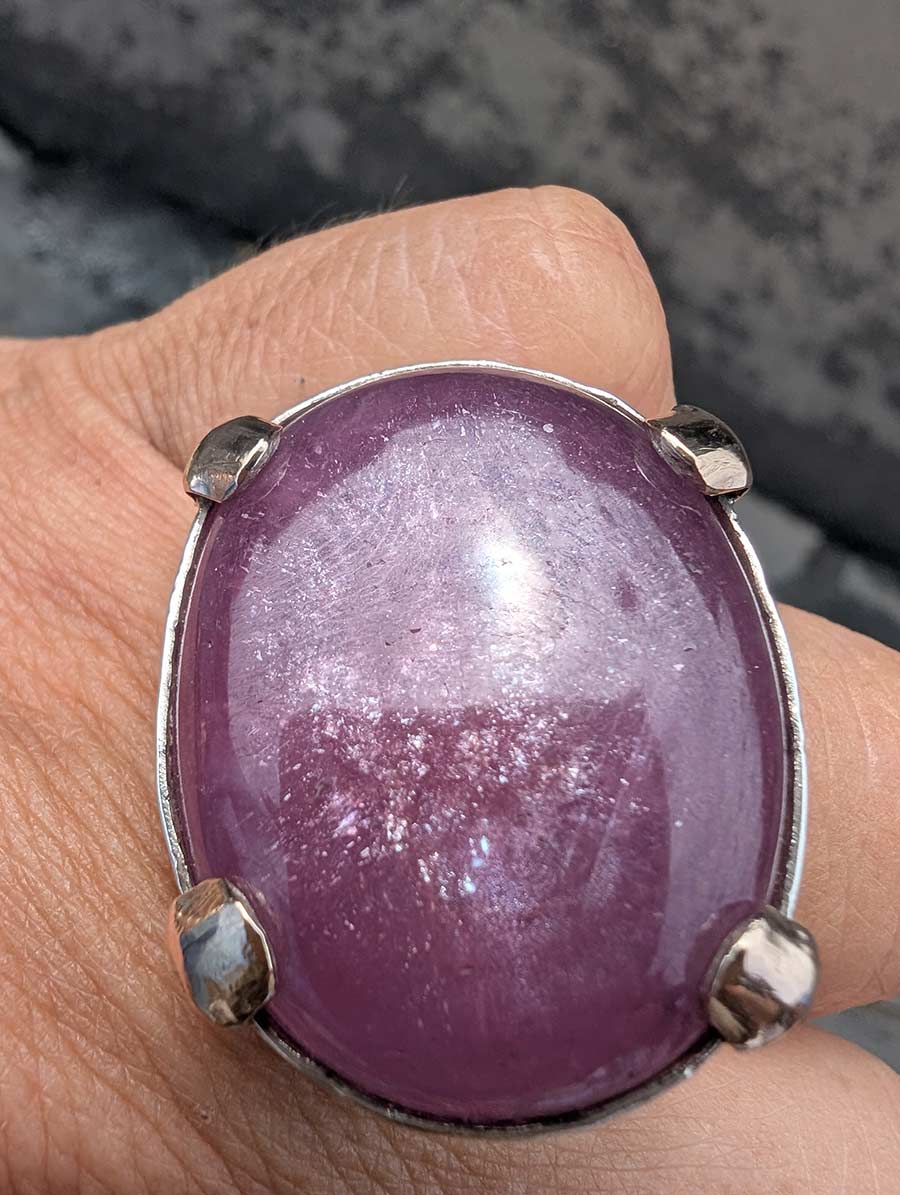
When love turns into doubt
You loved the colour.
Purple is not neutral. It carries weight: royalty, power, mystery, intuition, spirituality. It’s a colour people choose when they want to be seen as something more than ordinary.
So when you saw that stone, part of you probably thought:
“This feels like me.”
Or:
“This feels like who I’m becoming.”
But then you put it on… and something shifted.
Instead of feeling empowered, you felt uncertain.
Instead of feeling proud, you felt watched.
Instead of feeling sure, you started questioning:
Is it real?
Is it ruby?
Is it worth it?
Am I being fooled?
Why do I feel smaller instead of bigger?
That’s important. Because jewellery usually amplifies how we already feel about ourselves. A good piece doesn’t create confidence — it reflects it back to you.
So if wearing it made you lose confidence, that tells us the ring isn’t aligned with how you see yourself right now.
Not because it’s ugly.
Not because it’s fake.
But because it’s asking a question you don’t want to answer yet.
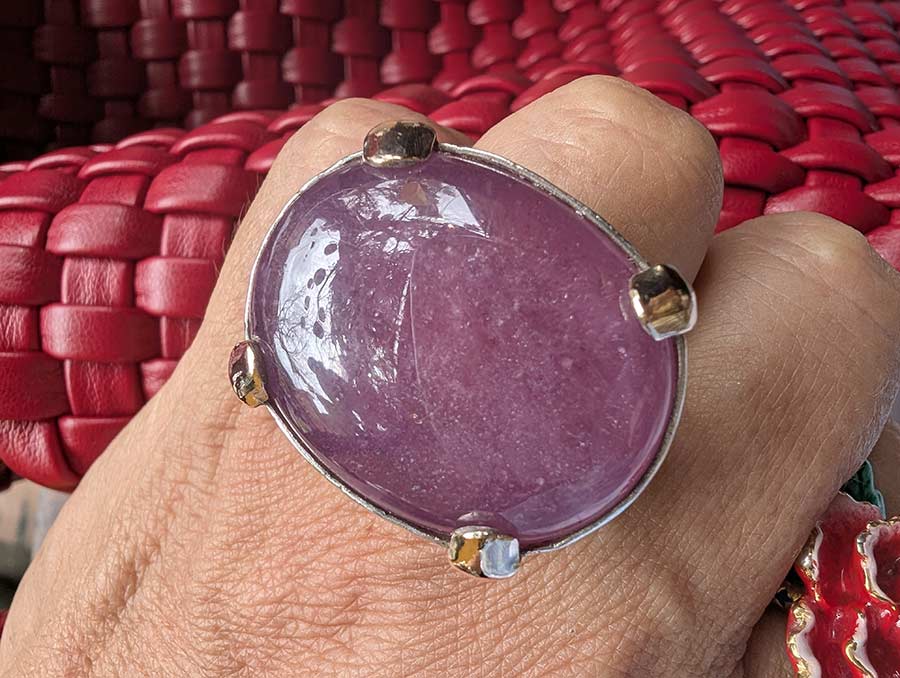
“Is it really a ruby?”
That doubt isn’t about geology.
It’s about trust.
Vietnam has beautiful stones, but also a culture of optimistic naming: ruby, sapphire, tourmaline, spinel — the words float easily. So your mind went straight to:
“What if this isn’t what they say?”
And once that seed is planted, everything else follows:
If the stone isn’t what I think it is…
Am I being naive?
Am I being sentimental instead of smart?
Did I want the story more than the truth?
You even asked for a reduction — something you’ve never done before. That’s huge.
That’s not about money.
That’s about discomfort.
When we are truly comfortable with a purchase, we don’t negotiate it afterwards. We protect it. We justify it. We glow with it.
You did the opposite.
You tried to make it feel safer by making it cheaper.
Which means part of you already wanted an exit.
Can stones give the “wrong vibration”?
Spiritually? Many cultures believe yes.
Psychologically? Also yes.
Whether you believe in crystal energy or not, objects carry meaning.
If a stone is linked in your mind to:
– doubt
– pressure
– second guessing
– lack of approval
– feeling watched
– feeling unsure
…then that stone becomes a symbol of that emotional state.
So when you put it on, you’re not just wearing purple.
You’re wearing the whole story:
The hesitation.
The return.
The pull.
The doubt.
The negotiation.
The question of authenticity.
That’s heavy for a finger.
And that’s why it “bothered” you.
Not because the stone is cursed.
But because it doesn’t match the chapter you’re in.

Why your daughter and friend dislike it
This part matters more than you think.
The people closest to us often sense when something doesn’t sit right — even if they can’t explain why. They don’t see the ring. They see you wearing it.
And what they probably saw was:
You less certain.
You more defensive.
You explaining it.
You justifying it.
You doubting it.
So when they say “give it back,” they’re not judging the jewellery.
They’re protecting your energy.
They know your usual pattern:
You choose boldly.
You don’t beg for reductions.
You don’t spiral over authenticity.
You don’t lose confidence over a ring.
So when this one changed you, they noticed.
And they didn’t like that version of you.
Why this ring has such power over you
Because it represents a crossroads.
On one level:
It’s just a purple stone ring.
On another level:
It’s about identity.
Do I trust my taste?
Do I trust my instinct?
Do I trust sellers?
Do I trust myself?
Am I still decisive?
Am I still sovereign in my choices?
The ring triggered all of that.
That’s why you didn’t just buy it and forget it.
You circled it.
You thought about it.
You felt about it.
It became symbolic.
And symbols can either strengthen us or unsettle us.
This one unsettled you.

The “pay later” detail
This is subtle, but powerful.
You didn’t fully own it yet.
It’s physically on your hand, but emotionally unresolved.
That creates tension:
Is it mine?
Is it temporary?
Can I escape this decision?
That limbo state feeds anxiety.
A piece of jewellery should feel like:
“Yes. This is mine.”
Not:
“I might give this back.”
If you already feel relief imagining returning it… that’s your answer.
So… why are you second guessing yourself?
Because:
You didn’t buy from joy.
You bought from pull + doubt.
You didn’t wear it with pride.
You wore it with questions.
You didn’t feel admired.
You felt examined.
You didn’t feel powerful.
You felt smaller.
And jewellery should never make you smaller.
The soul mismatch
You asked:
“Can stones not match the soul?”
That’s a beautiful question.
Some pieces fit who we are.
Some fit who we want to be.
Some fit neither.
This ring might belong to:
– a different woman
– a different phase
– a different story
– a different confidence level
It doesn’t mean it’s bad.
It just means it’s not yours.
And your intuition knows that, even while your mind is still trying to justify it.
The clean truth
You are not returning it because:
– it might not be a ruby
– your daughter dislikes it
– your friend dislikes it
– you asked for a reduction
You’re returning it because:
It changed how you felt about yourself.
That’s the only reason that really matters.
Jewellery should:
✔ increase confidence
✔ feel like extension of self
✔ feel obvious, not debated
✔ feel safe, not suspicious
✔ feel admired, not defended
This ring does none of that.
Final thought
Sometimes the lesson isn’t in owning the piece.
Sometimes the lesson is:
“I am allowed to walk away from something I was drawn to.”
That’s power too.
You didn’t fail by doubting.
You succeeded by listening.
And the fact that you’re even asking these questions means:
Your intuition is awake.
Your standards are high.
Your relationship with beauty is emotional, not shallow.
Which is exactly why this ring bothered you.
Not because it’s wrong.
But because it’s wrong for you.
And that’s a brave thing to admit.








You must be logged in to post a comment.