
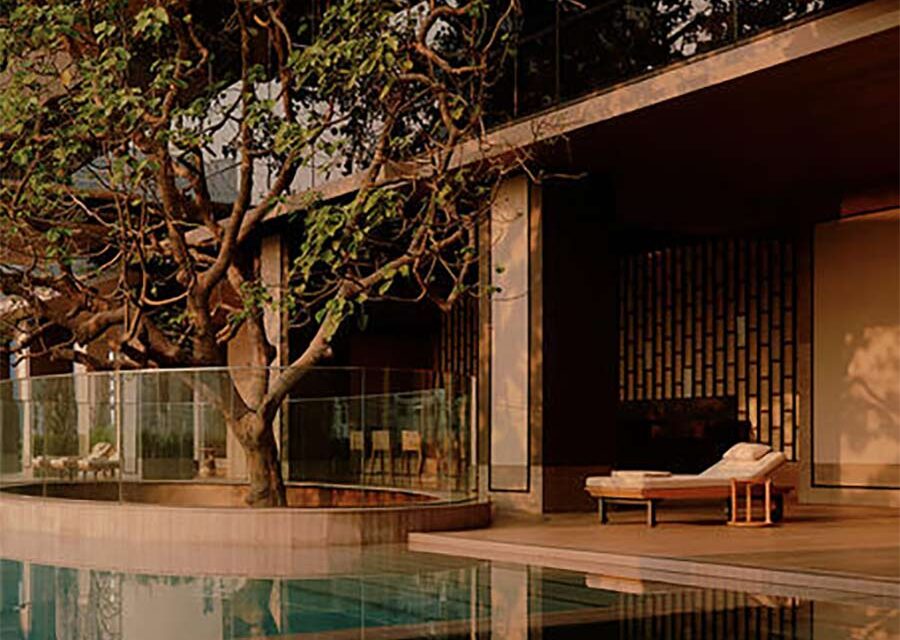
I am in Bangkok for five weeks, it’s the city that does drama: rooftop pools, riverfront glamour, lobby florals the size of small cars. But 2026 Bangkok luxury is less about being impressed and more about being regulated — nervous system down, sleep repaired, digestion steady, skin calm, brain sharp. Hotels are responding with something more strategic than a spa menu: a full-body, full-day operating system.
Two big forces are pushing this shift. First, Bangkok’s luxury landscape is getting denser and more competitive with high-profile openings and landmark reboots (notably the Ritz-Carlton at One Bangkok, the transformed Dusit Thani, and Aman’s urban sanctuary in Nai Lert Park). Second, the global wellness economy has moved beyond “treatments” into sleep, recovery, and sensory design — the parts of travel that actually determine how you feel when you land.
Here’s what’s different now — and what it means for anyone booking Bangkok in 2026.
Any shopping mall has wellness, and therefore, hotels need to step up and compete.
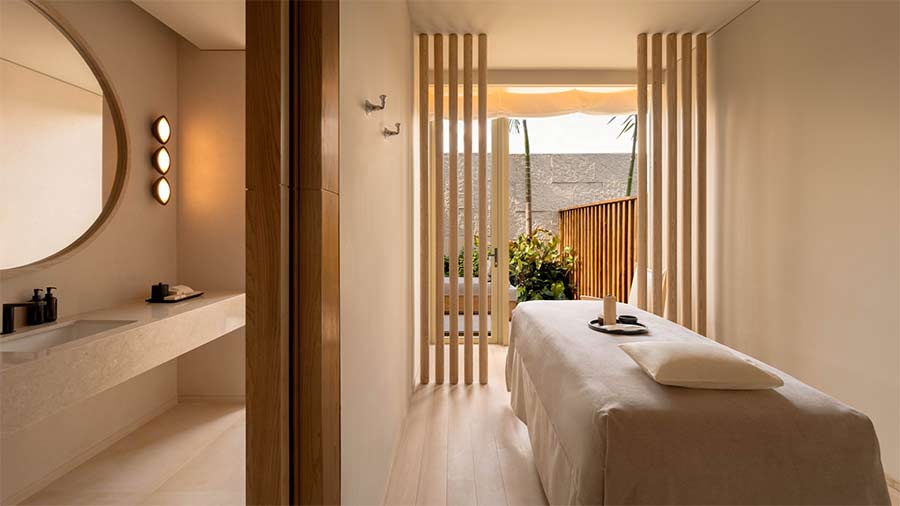
1) Wellness is no longer “the spa.” It’s the hotel’s main product.
The old model was simple: you checked in, you ate too much, you booked a massage to “undo” it.
The 2026 model is preventative: build wellness into the architecture of the stay movement, recovery, nutrition, heat therapy, and increasingly, science-led add-ons. At the top end, Bangkok is leaning into urban wellness centres and optimisation rather than “pampering.”
- Four Seasons Bangkok has moved in this direction with partnerships that position wellness as training + recovery, not just relaxation (their announced collaboration with Form Recovery and Wellness is a clear signal of where the market is going). Why compete when it’s smarter to just join forces?
- Aman Nai Lert Bangkok is explicitly framing itself as a wellness hub with a large spa/wellness centre that blends Thai healing traditions with medical-wellness components.
- Dusit Thani Bangkok’s relaunch also puts wellness front and centre, describing an “urban wellness concept” designed to go beyond the spa experience.
What this looks like on the ground: more structured programming, more “choose your goal” menus (de-stress, energise, recover), and wellness that’s designed to work even if you only have 36 hours.
2) Sleep is the new status symbol — and hotels are building for it.
Sleep used to be an afterthought. Now it’s a luxury flex: the traveller who lands in Bangkok and still looks calm by breakfast.
Globally, “sleep tourism” and sleep science have surged into the mainstream, and Bangkok is positioned to capitalise because it’s both a high-energy city and a wellness destination. Hotels are adapting in three ways:
A. The room becomes a sleep tool.
Not just “quiet,” but engineered for downshifting: better sound insulation, blackout quality you can trust, fewer blinking LEDs, and controls that don’t require a PhD at midnight.
B. Sleep support becomes a service.
Expect more pillow menus, magnesium-forward “sleep” minibar options, herbal infusions, and curated bath rituals. You’re also seeing travellers ask for sleep-specific rooms — and hotels responding with more consistency.
C. The wellness centre supports sleep, not just muscles.
Bangkok already has dedicated wellness retreats offering science-led sleep programmes (Forbes has highlighted Bangkok’s place in the sleep tourism story).
City hotels are taking cues: breathwork, nervous system “reset” sessions, and treatments that are framed around circadian rhythm rather than “beauty.”
Your 2026 Bangkok booking filter: if a hotel’s room feels like a nightclub with a bed (harsh overhead lighting, noisy corridors, thin curtains), it’s behind the curve.
3) Lighting is becoming human-centric — and it’s changing everything.
Lighting is the most underrated luxury feature because it affects sleep, mood, skin, and the entire feeling of a room.
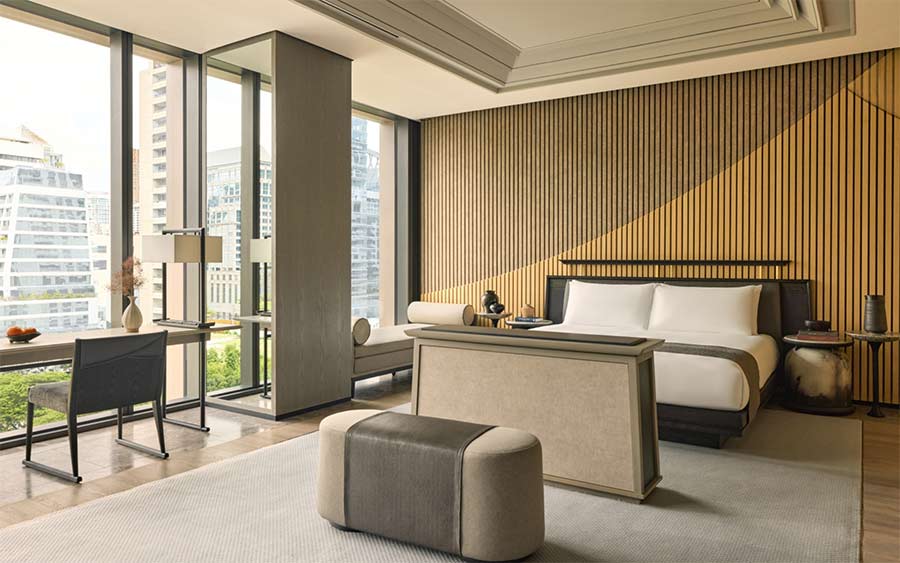
Bangkok 2026 hotels are increasingly moving toward layered, warm, adjustable lighting — and away from the single overhead “interrogation light.” This aligns with the broader wellness shift toward circadian-friendly environments.
What you’ll notice in better hotels:
- softer evening scenes (warm dimming) that tell your body it’s time to slow down
- properly placed bedside lighting (not the “one lamp that blinds your partner”)
- bathrooms with lighting that flatters without becoming theatrical
- intuitive controls (or at least fewer confusing panels)
It sounds small until you stay somewhere that does it well — then you realise how many hotels accidentally keep you wired.
4) Scent has evolved from “signature fragrance” to “sensory choice.”
Bangkok luxury has always loved scent — lobbies that smell like a brand, elevators that smell like money.
But 2026 is more nuanced. Guests want control, not coercion. That means:
- subtler scenting in public spaces
- more sensitivity to allergies and headaches
- optional in-room scent rituals (choose your oil, your pillow mist, your bath blend)
- and, in the most thoughtful hotels: low-scent or scent-free room options
Scent is no longer just branding. It’s becoming part of the wellness conversation — especially for travellers arriving overstimulated.
5) Culinary is shifting from “celebrity chef” to “how will this make me feel tomorrow?”
Bangkok will always be one of the world’s great food cities — and luxury hotels are leaning into it hard. But the change is intentionality.
You’re seeing more:
- gut-friendly menus (lighter, less inflammatory options that still feel indulgent)
- fermentation and Thai herbal intelligence re-framed as wellness, not trend
- serious non-alcoholic and low-alcohol cocktail programmes (because “well” travellers still want a beautiful glass)
- and dining that feels local and rooted, not generic international luxury
Dusit’s relaunch, for example, highlights a large and ambitious dining programme built with chefs and mixologists — signalling that hotels see food and drink as a key battleground for loyalty, not an amenity.
In Bangkok, the winning hotels aren’t just feeding you — they’re curating how you experience Thai flavour, seasonality, and ritual without leaving you heavy and foggy.
6) The “urban sanctuary” is the new hotel blueprint.
Bangkok is intense in the best way — but travellers are increasingly buying a hotel as a refuge from heat, traffic, noise, and constant decision-making.
That’s why the setting is becoming part of the wellness pitch:
- One Bangkok is positioning itself as a major new district with large-scale public realm and green space — the kind of environment luxury hotels can use as an instant “calm perimeter.”
- Aman Nai Lert is literally anchored in Nai Lert Park — the promise is quiet inside the city rather than “escape the city.”
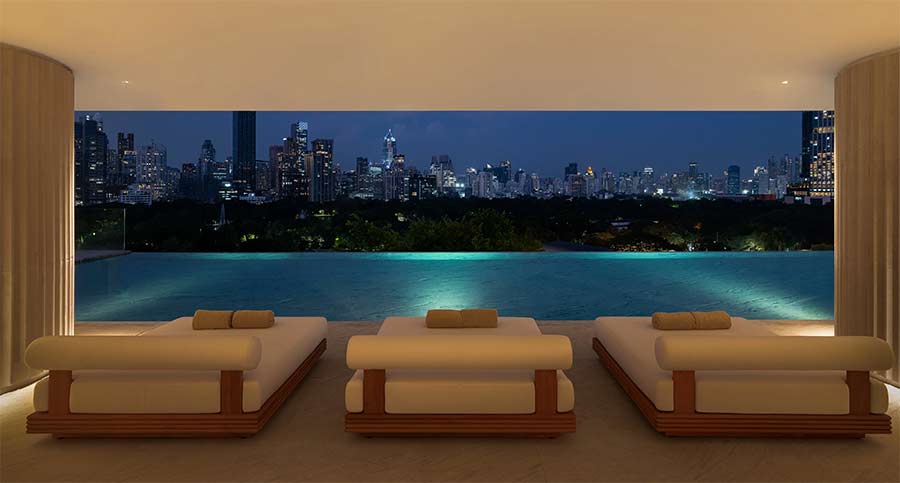
In 2026 Bangkok, the most desirable hotels won’t feel like they’re in Bangkok. They’ll feel like they’re protected from it.
The Australian Embassy is literally a stone’s throw away. The foot traffic is much less compared to Siam or Icon Siam malls.
7) Luxury service is becoming pre-emptive — and more personalised.
The best hotels are moving from “How was your stay?” to “Tell us what you need before you arrive.”
Expect:
- pre-arrival preference capture (sleep sensitivity, pillow types, scent preferences, wellness goals)
- minibar curation that matches your actual lifestyle
- quicker problem-solving via discreet messaging rather than awkward phone calls
- and more thoughtful “micro-rituals” that make a city stay feel grounded (Dusit even highlights a “Sacred Morning Ritual” as part of its identity, showing how hotels are turning daily rhythm into a differentiator).
What this means for you: the 2026 Bangkok hotel checklist
When you’re choosing a Bangkok hotel now, don’t just ask “Is it beautiful?” Ask:
- Is the room designed for sleep (real blackout + quiet + layered lighting)?
- Does wellness exist outside the spa (movement, recovery, heat, breathwork)?
- Can I control scent and light instead of being stuck with the hotel’s choices?
- Does the food programme include “feel good tomorrow” options (not just indulgence)?
- Is the hotel an urban sanctuary by location or design (park, river, protected calm)?
- Do they personalise proactively (before arrival, not after a complaint)?
Bangkok’s best hotels in 2026 are no longer selling “luxury” as a look. They’re selling it as a state: clear-headed, well-rested, emotionally regulated, and genuinely restored — in the middle of one of the world’s most electric cities.















You must be logged in to post a comment.