
Okay anyway, onto the meat of today’s post.
As women, we are exposed to relentless pressure around the way we look — especially when it comes to our bodies. From childhood, to celebrities, to social media, the messaging is constant and often feels impossible to escape. I know very few women who haven’t been affected by this in some way. And if I’m being honest, it feels like we are entering another era of extreme thinness — only this time, it’s medically assisted, branded as “wellness,” and wrapped in a disturbingly casual narrative.
Ozempic didn’t invent diet culture. But it has supercharged it.
What we’re seeing now — particularly in Hollywood — feels eerily familiar to those of us who lived through the early 2000s. Heroin chic. Protruding collarbones. Hollowed cheeks. The quiet competition of who could disappear the fastest. The difference is that today, the transformation is faster, more dramatic, and explained away as “health.”
And the industry is not even pretending anymore.
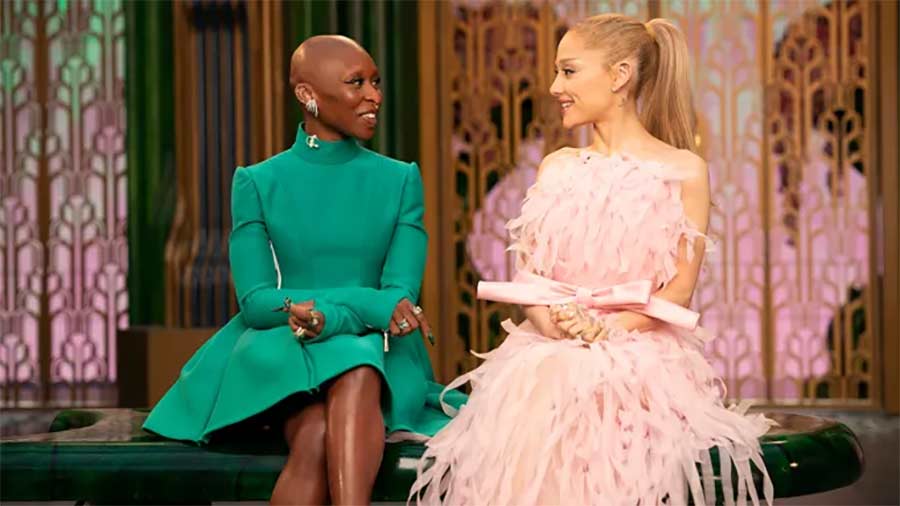
When Thinness Becomes a Job Requirement Again
Look at recent film and red-carpet appearances and it’s hard to ignore the pattern. Casts that appear uniformly skeletal. Faces that seem drained of vitality. Bodies that no longer look strong, nourished, or alive — just small.
Even in major productions, the visual standard has shifted. In Top Gun: Maverick, Jennifer Connelly — a woman who has always embodied a kind of grounded, grown-up beauty — appeared strikingly thin, to the point where many viewers commented on how fragile she looked on screen. Not unhealthy in a medical sense, perhaps, but undeniably reflective of an industry expectation: even women well into adulthood must now shrink themselves.
The message is subtle but brutal. You can be talented. You can be iconic. You can be accomplished. But you must also be tiny.
And when musicals like Wicked — a story beloved by young girls — circulate images of actresses whose bodies appear alarmingly diminished, it raises an uncomfortable question: what bar is being set, and for whom?
This isn’t about shaming individual women. We do not know their medical histories, their mental health journeys, or the pressures placed upon them. The issue isn’t personal — it’s systemic.
Ozempic Didn’t Create the Pressure. It Normalised It.
What Ozempic has done is make extreme weight loss feel accessible, casual, and inevitable. Suddenly, dramatic transformation is no longer framed as deprivation or disorder, but as a prescription. A shortcut. A lifestyle choice.
And that’s where things get dangerous.
Because when rapid, visible thinness becomes the norm among celebrities, influencers, and public figures, the unspoken implication is that anyone not pursuing it is simply choosing not to try hard enough.
For women with a history of disordered eating, this is deeply destabilising. For women still learning how to inhabit their bodies with kindness, it’s confusing. And for young girls — it’s devastating.
What Are We Teaching Girls Right Now?
Perhaps the most disturbing part of this moment isn’t what’s happening in Hollywood — it’s what’s happening downstream.
The beauty industry is now openly targeting children under nine with facial treatments, skincare routines, and “preventative” aesthetics. Anti-ageing before puberty. Contouring before self-identity. Weight-loss narratives before adult bodies even exist.
We are raising girls in a culture where their reflection is introduced as a problem to be solved.
How reassuring is it for a young girl to watch her role models grow visibly smaller, more hollow, less human — and be told that this is success? That this is discipline? That this is health?
When thinness becomes the loudest achievement, we strip women of the permission to be expansive — emotionally, intellectually, physically.
The Cost of Shrinking
There is a quiet grief in watching women disappear.
Not because thin bodies are wrong — but because compulsory thinness always comes at a cost. It steals energy. It steals joy. It steals presence. It narrows the definition of beauty until it excludes most women, most of the time.
We’ve been here before. And we know where it leads.
Eating disorders don’t announce themselves. Body dysmorphia doesn’t trend with disclaimers. Cultural pressure doesn’t arrive with warning labels. It just seeps in — through screens, through comparison, through the slow erosion of self-trust.
A Different Kind of Aspiration
What if the next era of beauty wasn’t about erasure, but embodiment?
What if women were allowed to look fed, grounded, alive? What if strength, warmth, curiosity, and capability were aspirational again — not just compliance with a shrinking silhouette?
We don’t need to demonise medication. We don’t need to police bodies. But we do need to interrogate a system that keeps cycling back to the same damaging ideal, repackaged every decade with new language and new tools.
Because the question isn’t whether Ozempic works.
The question is: who pays the price when thinness becomes the moral high ground again?
And more importantly — who is watching, and learning, and internalising this before they even know who they are?










You must be logged in to post a comment.