
Why I Travelled 600km for a Thai Fire-and-Herb Abdominal Treatment
Baan Din Body Herbal Clinic in Hua Hin is the kind of place you don’t stumble into by accident. It’s family-run, rooted in Thai tradition, and quietly confident—no flashy wellness theatre, no hard sell. Just practitioners who know their craft, herbs that smell like a Thai kitchen crossed with a forest after rain, and a treatment that feels ancient in the best way.
I travelled over 600km in a day to have this treatment again. That sounds dramatic until you’ve lived through the two-headed beast of menopause and gut issues at the same time. Hormones shifting like weather, sleep getting patchy, digestion becoming fussy, inflammation flaring up for no obvious reason, and that constant feeling of “my body is doing things without asking my permission first.”
When you’re in that phase, you don’t want miracles. You want relief. You want your body to feel like it’s on your side again.
This is gut health treatments at its best.
The treatment: Phao Ya (Thai Herbal Heat Treatment)
The traditional Thai treatment that uses controlled heat and herbs on the abdomen for digestive support is often referred to as Phao Ya—sometimes described more generally as a Thai Herbal Heat Treatment. It’s a practice that sits within Applied Thai Traditional Medicine, where the body is viewed through elements—earth, water, wind, and fire—and symptoms are often seen as an imbalance in those forces.
In plain language: if your digestion feels sluggish, windy, bloated, tight, crampy, or “stuck,” this treatment is designed to bring warmth and movement back into the area, helping the body release tension and restore flow.
And yes—there’s fire involved. Carefully controlled, professionally handled, and nowhere near as frightening as it sounds when you’re in trained hands.
Why it appealed to me now: menopause + gut health are linked
Menopause doesn’t just change your periods; it can change your gut. Many women notice:
- more bloating or trapped gas
- constipation that appears out of nowhere
- increased food sensitivities
- reflux or a “heavy” feeling after meals
- fluctuating inflammation, water retention, and discomfort
Stress and sleep disruption—both common in menopause—also affect digestion. When the nervous system is on edge, the gut often follows.
So when someone tells you, “This treatment focuses on the abdomen, digestion, and balancing the body’s heat and wind,” you pay attention.
What actually happens in a session
1) Preparation and abdominal massage
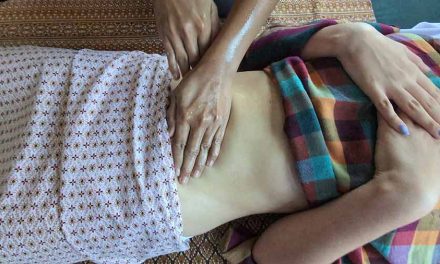
The treatment usually begins with hands-on work—massage and pressure along the abdomen and related points. This isn’t just relaxing; it’s purposeful. It warms the area, increases circulation, and helps the practitioner “read” your tension patterns. Some areas feel tender in a way that makes you realise how much you’ve been holding in your belly without noticing.
2) The herbal layer (the “hot” herbs)
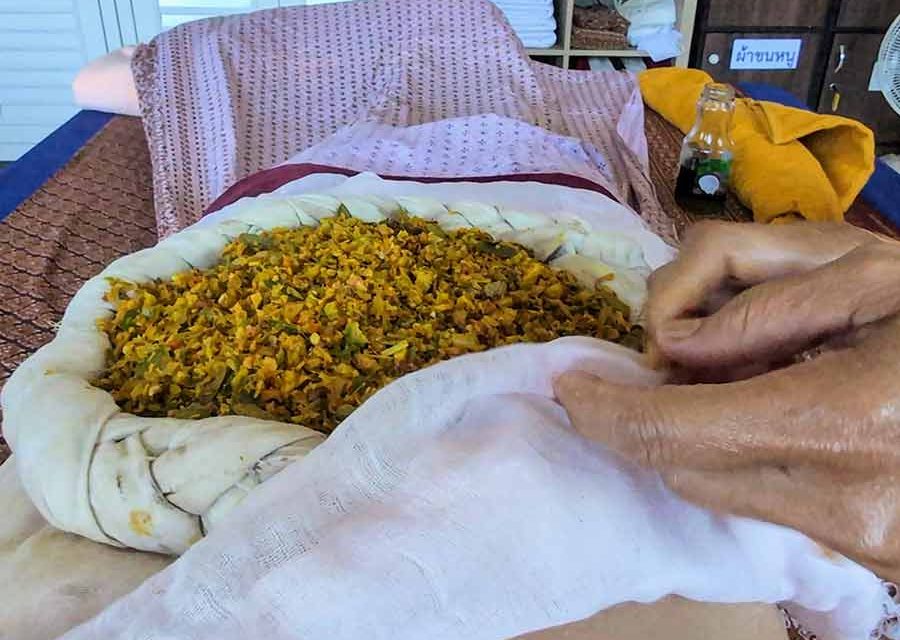
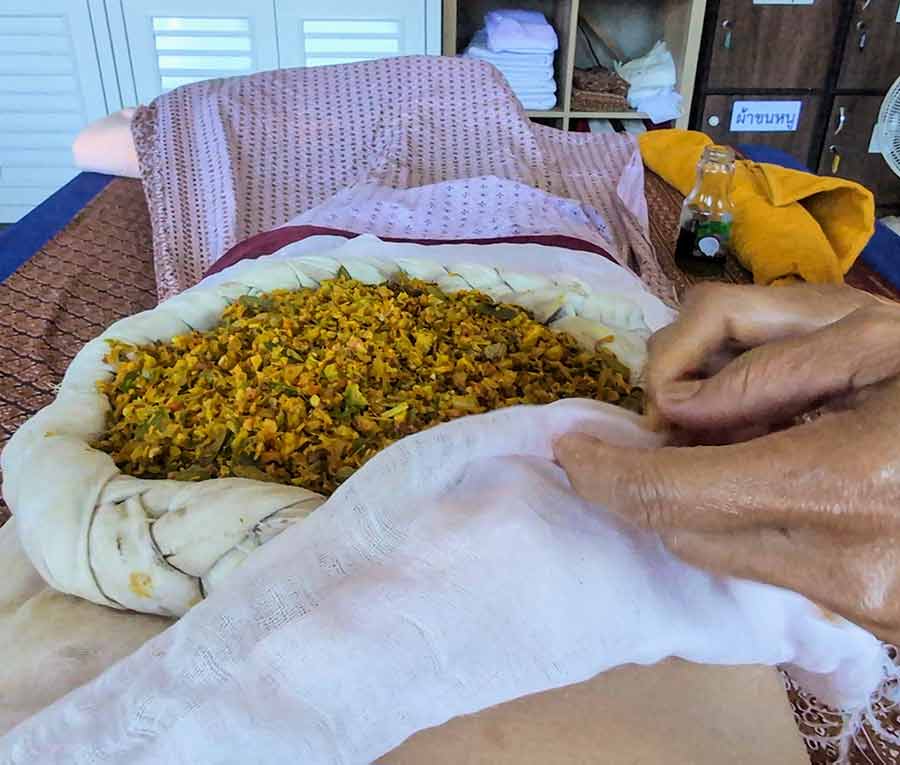
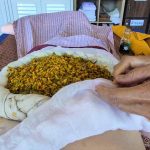
Then comes the herbal blend. In many places, this can be a mix described as “hot property herbs.” You may hear talk of 50 Thai herbs—a traditional-style multi-herb blend. The point isn’t to identify every plant like a chemistry exam; it’s the synergy: warming, aromatic, circulation-supporting herbs used together.
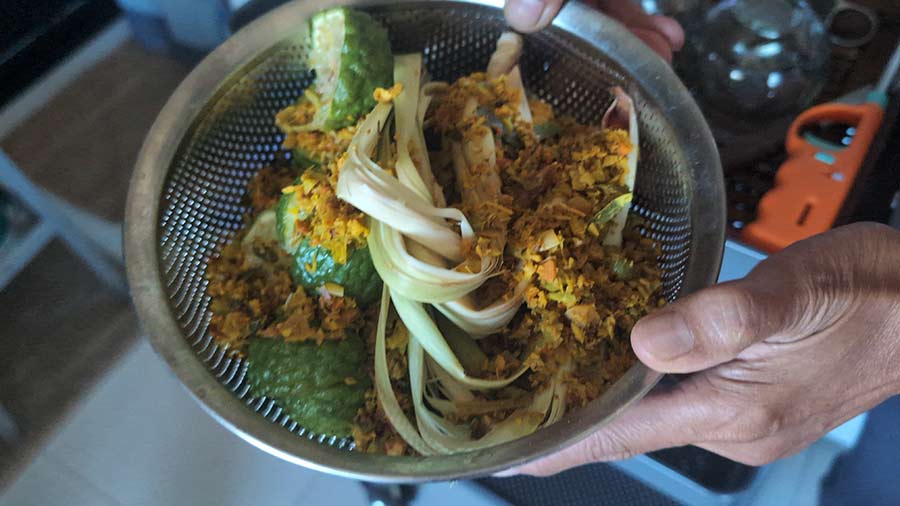
Commonly mentioned herbs in this style of treatment include:
- Turmeric (often used traditionally for soothing and inflammation support)
- Ginger (a classic for “wind,” bloating, and digestive comfort)
- Lemongrass (fresh, cleansing, aromatic—often used traditionally for balance)
- Plai (frequently used in Thai remedies for aches, spasms, and cramps)
A thin cloth is typically placed between the herbs and your skin to reduce irritation and keep things safe.
3) Controlled heat application (the fire element)
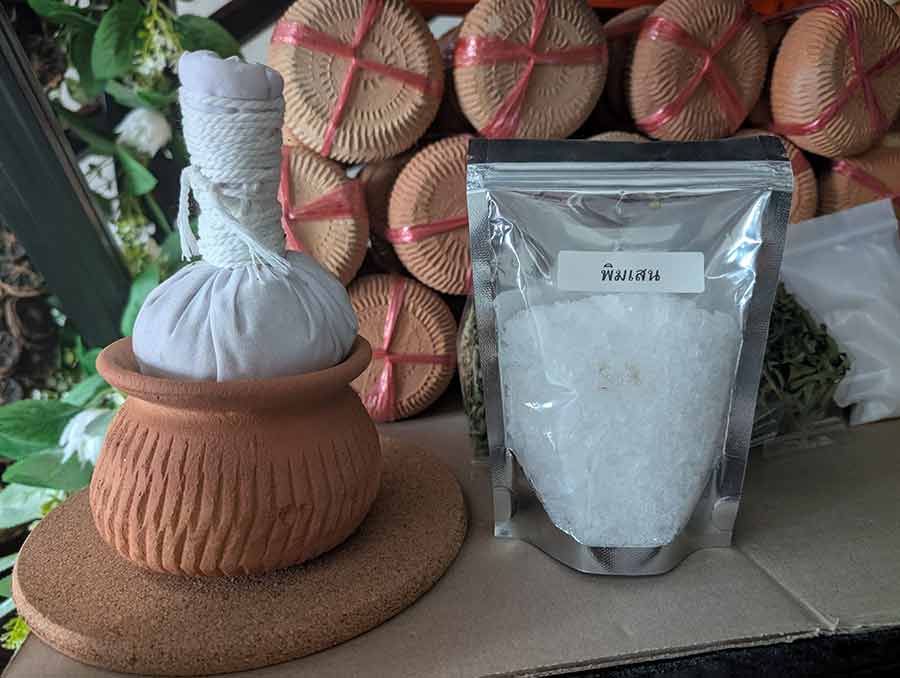
This is the signature part. The practitioner applies carefully controlled warmth over the herbal layer—often using a method that heats through cloth, sometimes involving alcohol over salt and a damp cloth (methods vary by practitioner and tradition). The goal is deep, penetrating warmth, not burning.
What it feels like:
A strong, comforting heat that spreads through the abdomen, like your stomach finally exhaling. If you struggle with trapped gas or tightness, it can feel as though something “unlocks.”
In Thai Traditional Medicine terms, this is about increasing the fire element in the right place—supporting digestion, easing stagnation, and helping release trapped “wind.”
The part people don’t tell you: it’s emotional, too
The belly is not just digestion. It’s where stress lands. It’s where many women carry tension—especially during menopause, when you’re navigating change, identity shifts, sleep disruption, and sometimes a low-grade anxiety that doesn’t even have a story attached to it.
Heat plus skilled hands can calm the nervous system. And when the nervous system relaxes, the gut often follows.
That’s part of why I made the trip. I didn’t just want a treatment; I wanted that state—the feeling that my body could soften again.
What benefits people seek from Phao Ya-style abdominal heat treatments
Traditionally, people pursue this type of treatment for:
- bloating and abdominal tightness
- constipation or sluggish digestion
- gas and “wind” discomfort
- menstrual or abdominal cramping patterns (where appropriate)
- lower back tension linked to the abdomen/hips
- general “coldness” or stagnation in the belly
Some also describe it as supportive for “detox” in a traditional sense—more accurately, it may support circulation, relaxation, and comfort, which can indirectly help the body’s normal processes.
Safety matters (especially with fire-based therapies)
This is not a DIY treatment. It should be done only by experienced practitioners with strong safety standards.
It’s also smart to be cautious if you have:
- unexplained abdominal pain
- fever, active infection, or skin irritation in the area
- bleeding disorders, are on blood thinners, or have neuropathy (reduced sensation)
- significant digestive symptoms that are new, severe, or persistent
If you’re dealing with ongoing gut issues—especially during menopause—it’s worth speaking with a qualified healthcare professional too. Traditional therapies can be a supportive piece, but they shouldn’t be the only line of defence if something serious is going on.
How I supported the treatment with “modern” wellness basics
The most powerful results usually come from combining tradition with boring-but-effective foundations:
- Hydration + minerals: menopause can shift fluid balance; digestion hates dehydration.
- Protein and fibre: steady blood sugar supports mood and gut motility.
- Gentle movement: walking after meals is underrated magic for bloating.
- Stress downshifts: breathwork, stretching, or quiet time—because your gut listens to your nervous system.
- Cooling teas if you run hot: chrysanthemum or pandan are often used as gentle, cooling options in everyday Thai life.
Why I’d go back (and why the “family-run” part matters)
There’s a difference between a wellness service and a wellness culture. In a family-run clinic, you often feel that difference immediately: the rhythm is calmer, the care feels personal, and the practitioner is focused on doing the treatment well—not upselling the next thing.
That’s what stayed with me.
I didn’t travel 600km for a trend. I travelled for a treatment that made sense to my body—right now—at this stage of life. Menopause asks you to renegotiate how you live in your skin. When something genuinely helps your digestion, your comfort, and your sense of balance, you stop calling it “alternative.”
You just call it worth it.







You must be logged in to post a comment.