
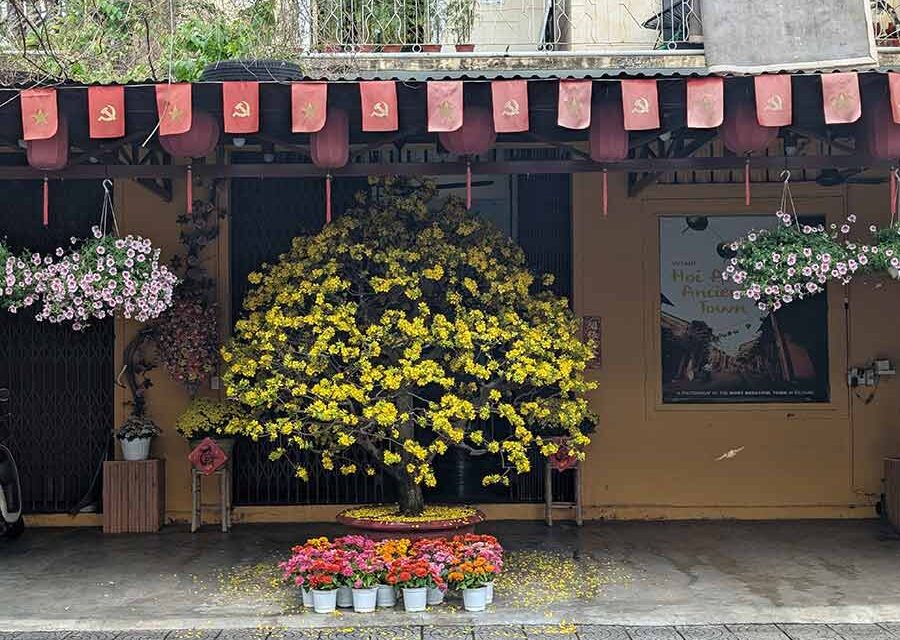
Lunar New Year in Hoi An is not just a date on the calendar — it’s a full sensory experience. The old town, already famous for lanterns and heritage streets, becomes an open-air flower market wrapped in incense smoke, calligraphy scrolls, and the warm hum of family reunions. Flowers aren’t only decoration here; they’re symbolic offerings of luck, health, and renewal. Streets, shopfronts, riverside paths, and private courtyards are filled with blooms chosen as carefully as food on the altar.
To visit Hoi An during Lunar New Year (Tết) is to see Vietnam at its most poetic: slow mornings, bright colours, and meaning layered into every petal. Among the most visible stars of the season are chrysanthemums, orchids, daffodils, sunflowers, and the iconic pink blossoms that signal spring itself.
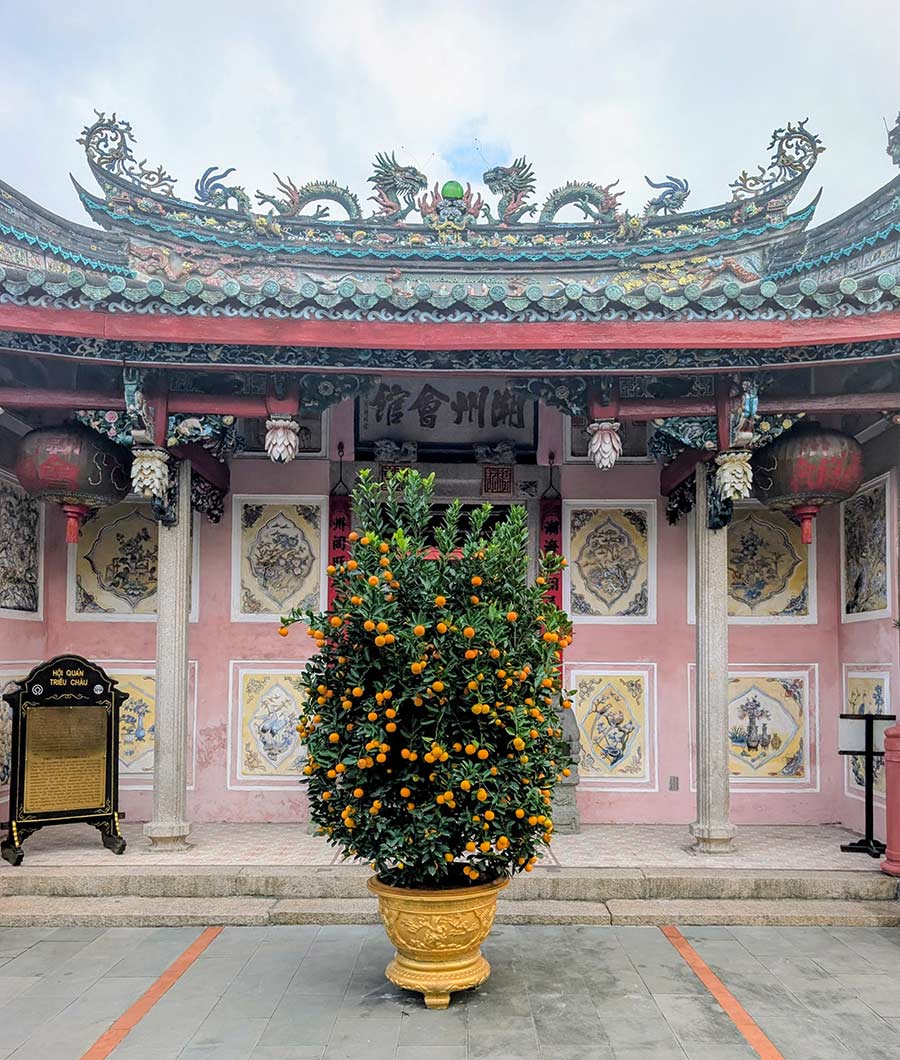
Chrysanthemums: Longevity and Quiet Strength
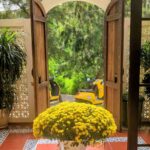
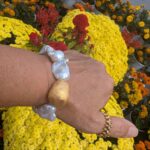
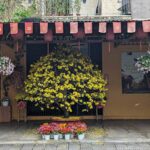
Chrysanthemums dominate the streets in neat pots and oversized baskets. Their golden and white heads seem to glow against yellow-painted walls and dark wooden doors.
In Vietnamese culture, chrysanthemums represent:
- Long life
- Stability
- Resilience
They’re often placed in pairs at entrances — one on each side of a doorway — acting as floral guardians of the home for the coming year. In Hoi An, you’ll see them lining bridges, tucked beside lantern shops, and arranged around ancestral altars.
What makes chrysanthemums special during Tết is their calm presence. While other flowers shout with colour, chrysanthemums feel grounded, reminding visitors that the New Year isn’t just about celebration — it’s about continuity, honoring elders, and keeping family lines strong.
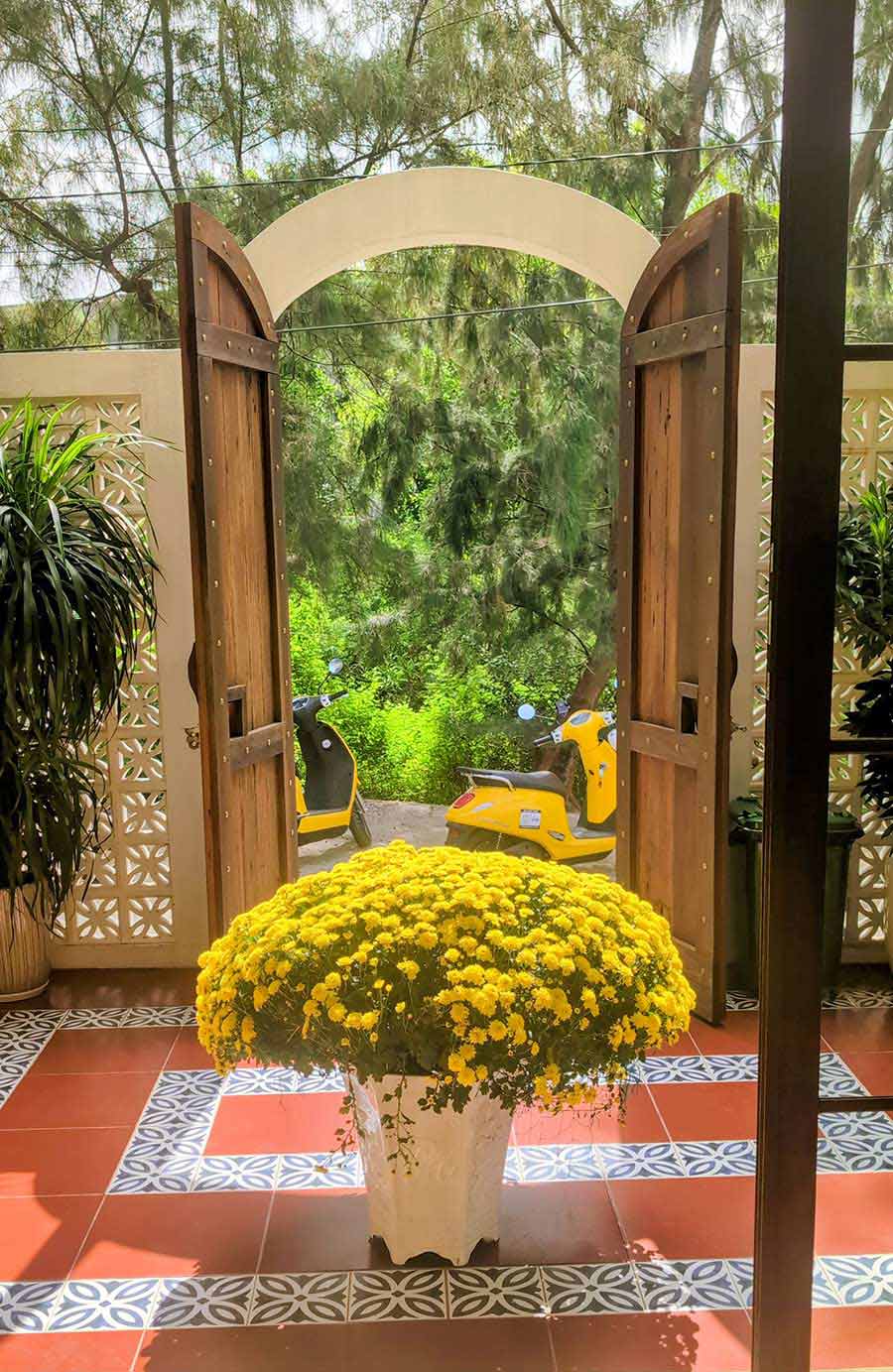
Orchids: Refinement, Love, and New Beginnings
Orchids appear everywhere in Hoi An during Lunar New Year — in cafés, boutique hotels, private homes, and temple courtyards. Their long stems and soft curves contrast beautifully with the town’s angular tile roofs and wooden beams.
Orchids symbolize:
- Fertility and growth
- Elegance
- Harmony in relationships
They are popular gifts because they last longer than cut flowers and feel modern while still respecting tradition. In Hoi An, orchids are often displayed in ceramic pots or woven baskets, blending rural simplicity with refined beauty.
Seeing orchids in this setting is powerful: tropical flowers representing delicate balance, framed by centuries-old merchant houses. It’s where old Asia meets contemporary life — exactly what makes Hoi An such a compelling New Year destination.
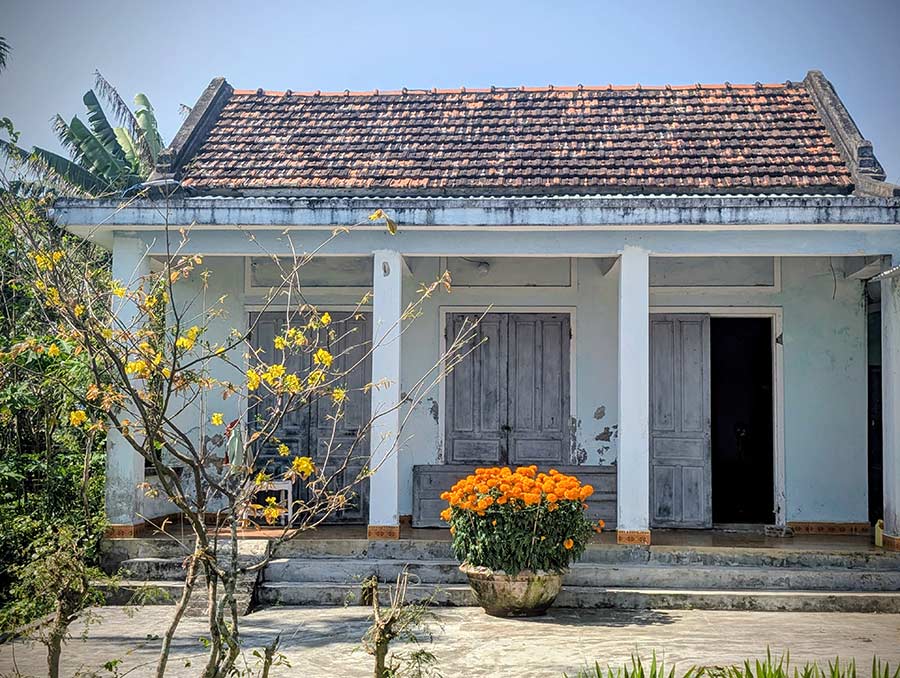
Daffodils: Purity and Hope
Daffodils are less traditional than peach blossoms or chrysanthemums, but they’ve become increasingly popular for Tết displays. Their bright yellow heads echo the lucky colour of gold, while their upright shape suggests forward movement.
They symbolize:
- Renewal
- Fresh beginnings
- Inner clarity
In Hoi An, daffodils are often placed near windows or on low tables inside homes, catching morning sunlight. For travelers, these flowers mirror the feeling of arriving in a town that seems paused between past and future.
Daffodils also feel deeply emotional in this context. They are quiet flowers — not loud, not extravagant — but they speak clearly of optimism. Walking through Hoi An during Tết, these blooms reinforce the sense that everyone is collectively wishing for better days ahead.
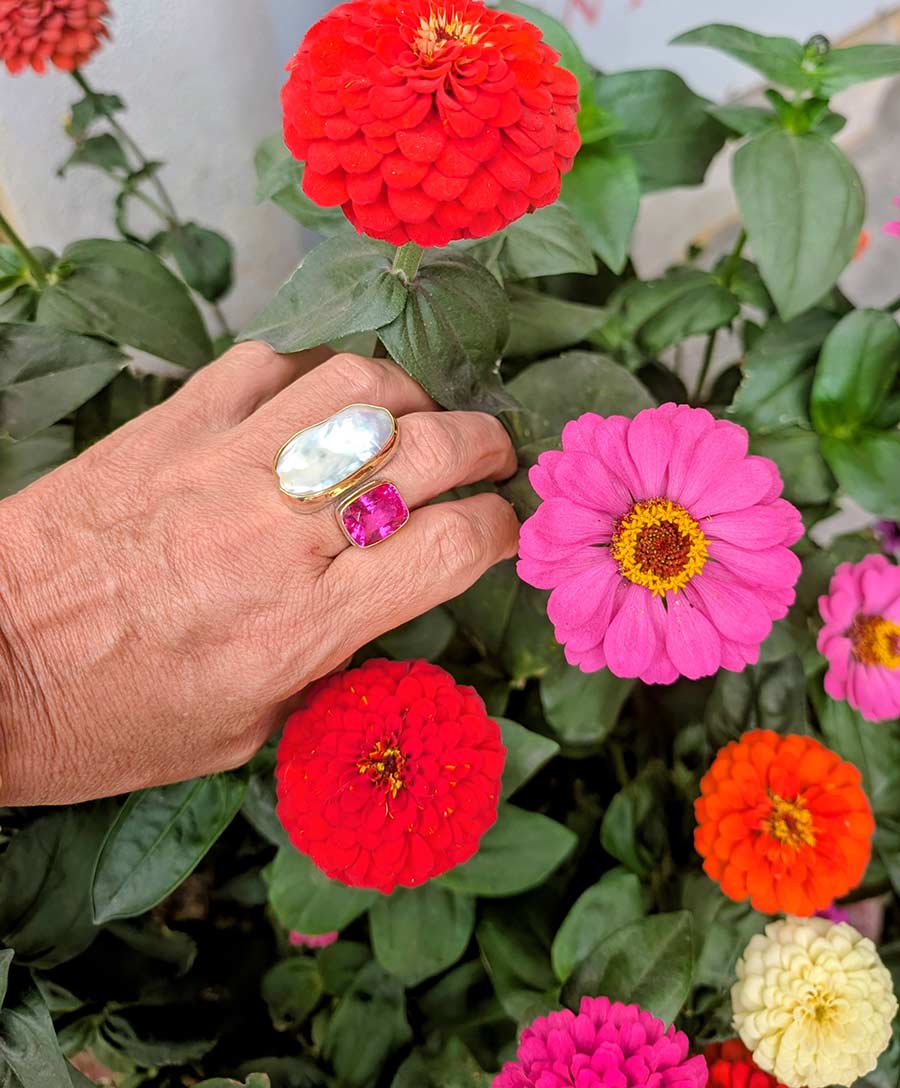
Sunflowers: Prosperity and Open Hearts
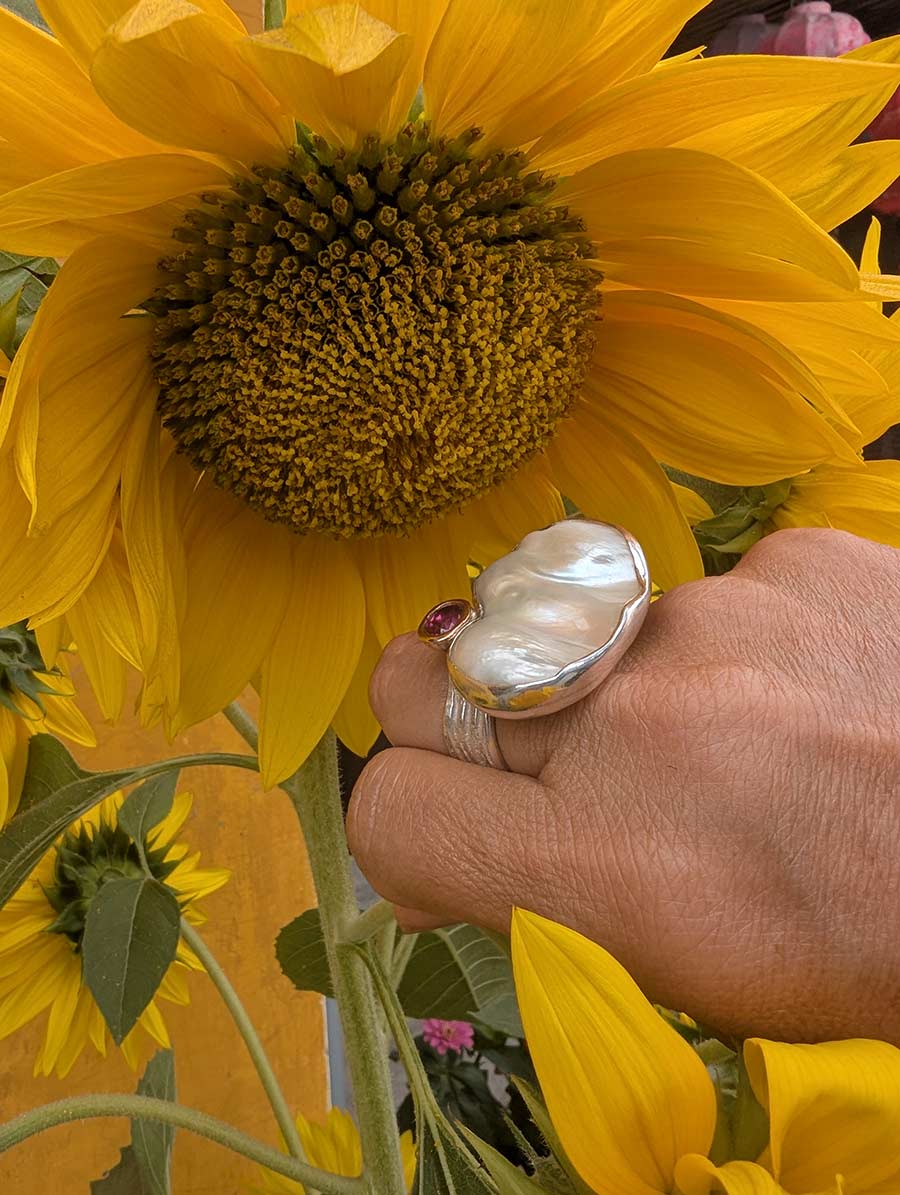
Sunflowers bring a different energy altogether. They appear in bundles along the roadside, at market stalls, and in large ceremonial arrangements near shops.
Sunflowers symbolize:
- Wealth and abundance
- Positivity
- Loyalty
Their faces always turn toward the light, which makes them a natural New Year symbol. In Hoi An, they are often mixed with red ribbons and lucky charms, creating arrangements that feel joyful rather than formal.
For visitors, sunflowers feel instantly welcoming. They match the golden glow of Hoi An’s lanterns and the warmth of the local people. They make the town feel less like a museum and more like a living celebration.
Pink Blossoms: The Spirit of Tết Itself
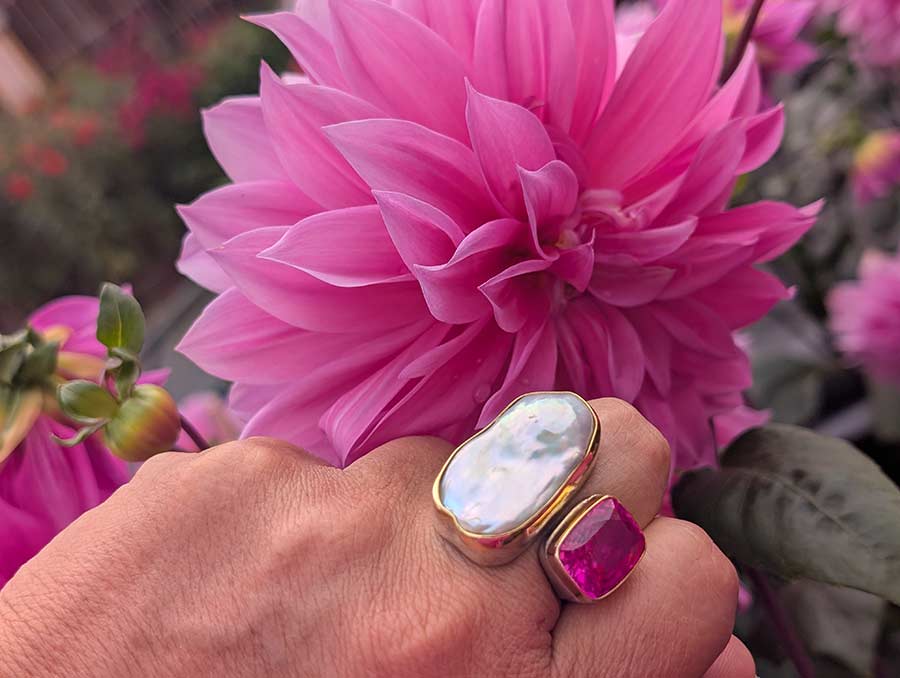
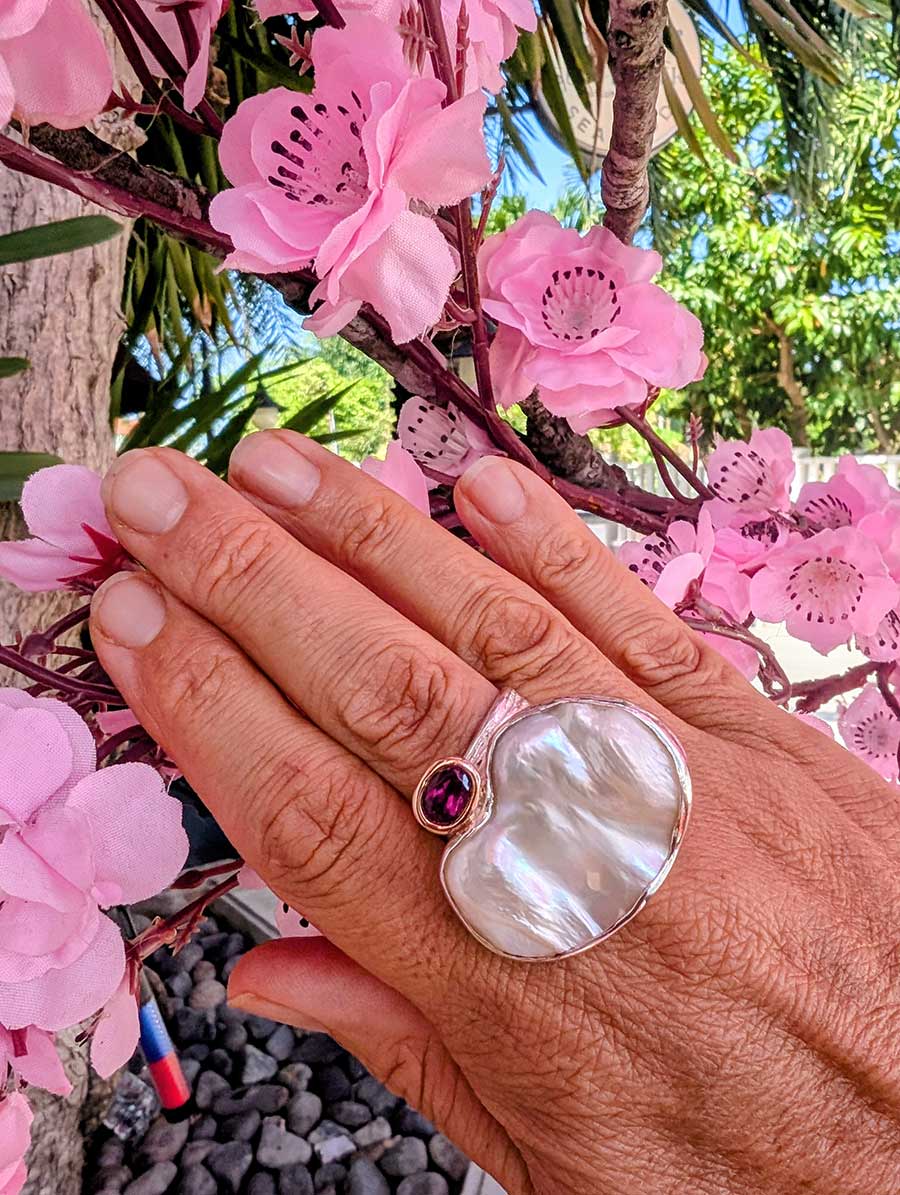
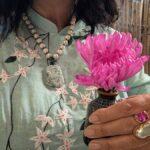
The pink flowers you see everywhere — especially in the days leading up to New Year — are typically peach blossoms (hoa đào) or apricot blossoms (hoa mai in the south). These are the most iconic Lunar New Year flowers in Vietnam.
They represent:
- Spring
- Love
- Good fortune
- Family unity
Branches of pink blossoms are tied to bicycles, leaned against doorframes, and sold in armfuls at street corners. In Hoi An, they soften the town’s strong architectural lines, making everything feel lighter and more romantic.
These blossoms aren’t chosen for their scent or longevity. They’re chosen for what they mean: the return of life after hardship, the promise of warmth after winter, and the beauty of fleeting moments.
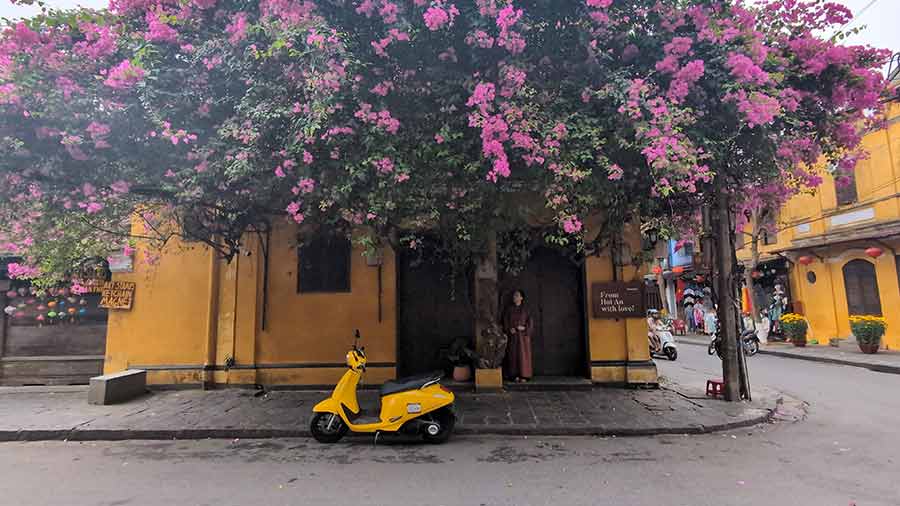
For travelers, this is one of the most photogenic times to visit Hoi An. The contrast of pink petals against mustard-yellow walls and red lanterns feels almost designed for storytelling.
Why Hoi An During Lunar New Year Feels Different
Hoi An isn’t a big city. It doesn’t explode with fireworks and chaos like Hanoi or Ho Chi Minh City. Instead, it becomes intimate.
You’ll notice:
- Shops closing so families can gather
- Streets quieter in the mornings
- Altars set up in doorways with flowers, fruit, and incense
- Locals dressed in new clothes, walking slowly
Flowers play a central role in this transformation. They replace commercial signage, soften empty storefronts, and turn everyday streets into symbolic spaces. The town feels less like a tourist destination and more like a shared living room.
Visitors often worry about closures during Tết, but in Hoi An, this actually enhances the experience. You’re not rushing from attraction to attraction — you’re observing ritual, movement, and meaning.
Markets Become Art Installations
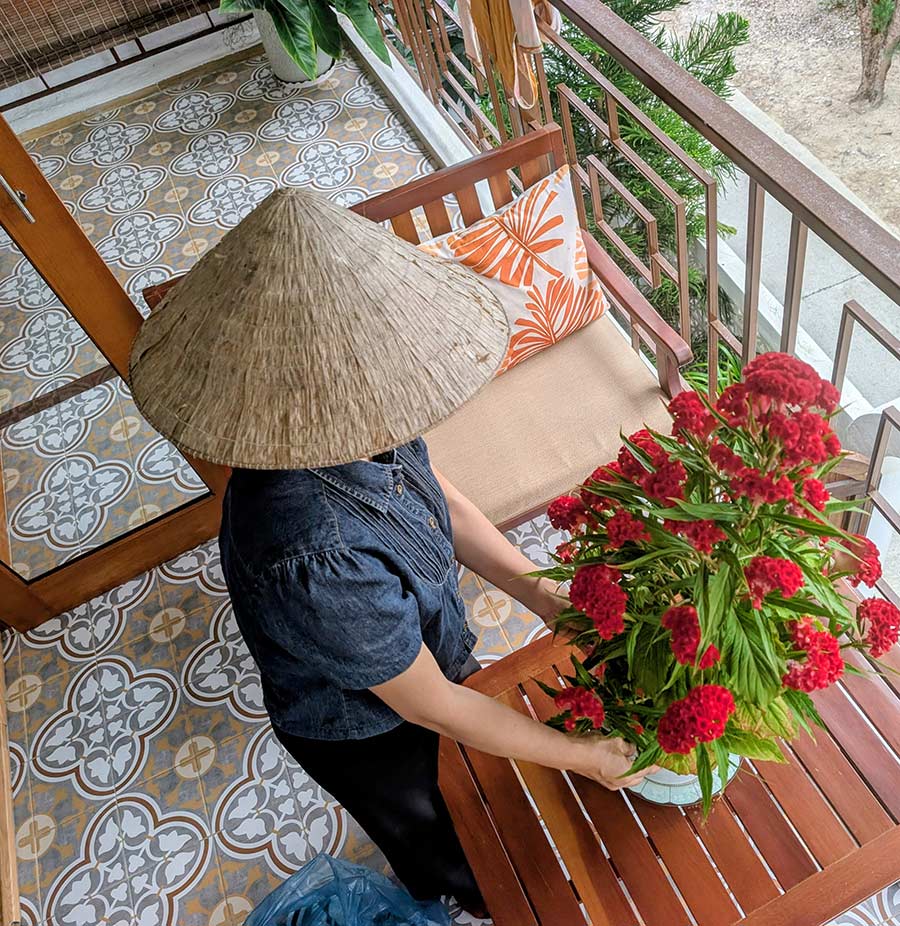
In the days before New Year, Hoi An’s markets turn into flower galleries. Chrysanthemums stacked in pyramids, orchids dangling from bamboo poles, sunflowers bursting from plastic tubs.
There is something profoundly human about watching families choose flowers:
- Children pointing at colours
- Elders inspecting buds for longevity
- Couples negotiating prices
Every purchase carries intention: health for parents, success for children, peace for the home.
As a visitor, you’re not just watching commerce — you’re watching hope being arranged into bouquets.
A Photographer’s Dream
If you care about visual storytelling, Lunar New Year is Hoi An’s most cinematic season.
You get:
- Pink blossoms drifting through alleyways
- Yellow chrysanthemums against dark wood
- Sunflowers glowing in lantern light
- Orchids inside ancient halls
The flowers don’t compete with the architecture — they complete it.
This is when Hoi An looks less curated and more emotional.
The Deeper Reason to Visit
Ultimately, the reason to visit Hoi An during Lunar New Year isn’t just for the flowers. It’s for what they represent.
Each bloom is a quiet wish:
- For health
- For prosperity
- For love
- For continuity
In a world that moves fast, Hoi An pauses — and lets flowers speak.
You don’t come here for parties.
You come here to witness renewal.
And when you leave, the memory you take isn’t just colour — it’s meaning.





You must be logged in to post a comment.