

There are two kinds of happiness.
The first is the kind you can chase: purchases, upgrades, compliments, status, “wins” that look good from the outside. It can feel amazing in the moment, but it’s fragile. It depends on circumstances, staying pleasant, and people staying kind.
The second is the kind you protect. It’s not flashy. It’s the quiet foundation that keeps you steady when life turns brutal. I call it critical happiness: the essentials that make life worth living even when everything else is shaking.
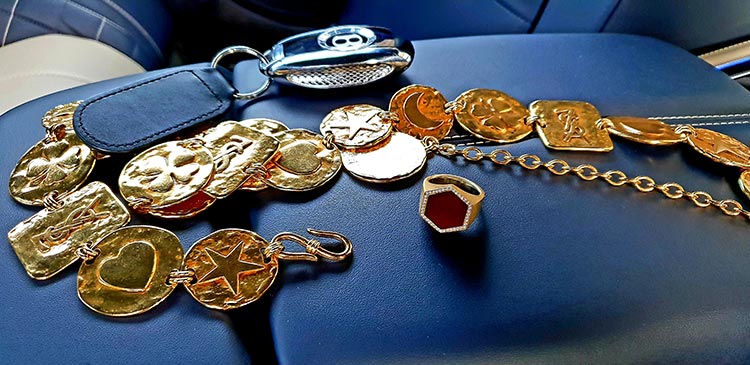
For me, 2025 has been a year that forced this lesson to the surface. Stress, injustice, bullying aimed at my family, and the feeling of watching people try to take what isn’t theirs. Then, last week, our Tuscan home was trashed. My gold and valuable jewellery, sentimental pieces, symbols of history, love, and identity, were stolen. That violation hits differently. It’s not just theft. It’s strangers walking through your private world as if it’s nothing.
And then came the body’s response.
I had to go for tests I hadn’t planned. My health is good, but my blood pressure was through the roof. The doctor’s message was simple and uncomfortably honest: preserve your energy for your kids. Preserve it for your husband. Preserve it for the battles that are actually worth fighting.
That appointment was a turning point. Not because it “fixed” anything, but because it gave me a new filter for everything I was letting into my nervous system.
What is critical happiness?
Critical happiness is not pretending everything is fine. It’s not “positive vibes only.” It’s a set of priorities and practices that keep you alive on the inside.
For most people, it’s made of three pillars:
- Family unity (or your core relationships)
- Health (physical, mental, nervous system)
- Meaning (faith, purpose, values, the “why” that holds you)
If you protect those three, you can survive seasons where money, possessions, reputation, or comfort take a hit. Without them, even a “successful” life can feel empty and unstable.
The painful truth is this: money can be replaced. Health often can’t. Gold can be replaced. Time with your children can’t. And when teenagers are battling anxiety, what they need most is not a perfect home or perfect parents but steady love, predictable safety, and a sense that they are not fighting alone.
Stress is not just a feeling — it’s a cost
Stress isn’t only in your mind. It charges your body interest. It disrupts sleep, raises blood pressure, tightens muscles, shortens tempers, and quietly steals your patience from the people who deserve it most.
One of the hardest lessons I’m learning is that not all stress is “equal.” Some stress is necessary: protecting your family, handling legal matters, safeguarding your future. But some stress is optional: arguments that go nowhere, spiralling thoughts at 2 a.m., endless explaining yourself to people who are committed to misunderstanding you.
You don’t just “handle” stress. You choose it.
And because we only get a limited amount of emotional energy per day, the question becomes:
Is this problem worth the part of me it will consume?
Choose your stressful moments
Here’s a practical rule I’m trying to live by:
If it steals your peace but doesn’t change the outcome, it’s not a battle, it’s a drain.
Some situations require action, but not constant emotional engagement. You can take steps without letting it eat your whole inner life.
Try this three-part filter when life is chaotic:
- What must I do? (legal deadlines, safety, essential decisions)
- What can I delay? (anything that won’t matter in six months)
- What can I drop? (arguments, performative outrage, pleasing everyone)
I chose to get gut health treatments.
This isn’t avoidance. It’s leadership. It’s the discipline of conserving strength for what matters.
Family unity: the “safe house” your kids live in
When the outside world becomes hostile — bullying, injustice, instability — your home (even if it’s imperfect, even if it’s under stress) needs to become a place of emotional safety.
Teenagers in anxiety don’t always ask for comfort. Sometimes they push you away. Sometimes they test you. But what they’re really asking is:
“Are you staying?”
Never give up on your kids. Not emotionally. Not spiritually. Not in the small moments.
A few simple habits can protect family unity when you’re under pressure:
- One daily check-in: ten minutes, phones away, no lecturing. Just: “How are you really?”
- Repair quickly: when stress makes you sharp, apologise fast. A calm apology teaches safety.
- Protect the tone of the home: you can have serious conversations without living in constant tension.
- Don’t recruit your kids into adult battles: they don’t need every detail. They need stability.
Unity isn’t agreement. It’s loyalty. It’s the feeling that, whatever happens out there, we are not turning on each other in here.
Health: guard it like an asset you cannot repurchase
Your body is not a machine that can be driven endlessly and fixed later. The “later” doesn’t always come.
If your doctor says your blood pressure is high, listen. Not with fear, but with respect. It’s information. It’s your body waving a flag: slow down, or you will pay.
A few realistic ways to reduce the load (without pretending life is easy):
- Lower the daily adrenaline: fewer confrontations, fewer doom-scroll sessions, fewer late-night spirals.
- Sleep becomes sacred: protect it like you protect your valuables.
- Move your body gently: walking is underrated. It tells your nervous system you’re safe enough to breathe.
- Eat and hydrate as if it matters: because it does — especially under stress.
- Get support: doctor, therapist, coach, trusted friend, pastor — anyone who helps you carry the weight properly.
You don’t have to be perfect. You just have to stop treating your health like it’s “later” and your stress like it’s “free.”
Faith and meaning: when the world feels lawless
As a Christian, I return again and again to the same truth: treasure is not only what you can hold.
I won’t pretend it’s easy to pray when you feel violated, targeted, or exhausted. Sometimes prayer is not eloquent. Sometimes it’s one sentence: “God, help me.” Sometimes it’s tears. Sometimes it’s sitting in silence and letting your nervous system settle long enough to remember you are not alone.
Faith doesn’t erase grief. It gives grief a place to go.
When you lose possessions — especially sentimental ones — the ache is real. But I keep coming back to this: what thieves cannot take is who you are becoming. Your character. Your love. Your endurance. Your ability to show up for your children even when you’re hurt.
Practical tips for critical happiness
If you want a simple list to live by, try these:
- Write your top three priorities on paper (family, health, faith — or whatever yours are). Refer to it when stress tries to hijack you.
- Create an “energy budget.” Decide what gets your best energy and what gets leftovers.
- Set one boundary this week. One conversation you won’t have. One person you won’t explain yourself to.
- Turn your home into a refuge. Not by pretending, but by choosing peace in the way you speak and repair.
- Choose battles that protect your future. Not battles that only satisfy the urge to react.
- Replace what can be replaced. Gold can be replaced. Health may not. Time cannot.
- Pray like a person, not a performer. Honest prayer counts.
- Keep showing up for your kids. Especially when it’s hard. Especially when they’re anxious. Especially when you’re tired.
The conclusion nobody wants, but everyone needs
Life throws challenges that feel unfair. Sometimes it’s people. Sometimes it’s a loss. Sometimes it’s a sickness. Sometimes it’s a season of injustice.
Critical happiness is not the absence of problems. It’s the decision that your most important treasures will not be neglected just because the world is loud.
This year reminded me: I can fight. But I must fight wisely.
I can grieve what was stolen. But I will not let theft steal my health, my marriage, or my children’s sense of safety.
And I can’t control what happens next, but I can control what I give my energy to.
That is where critical happiness begins.













You must be logged in to post a comment.