
Luxury fashion has always fascinated me, but increasingly it is the second life of luxury that interests me most.
What happens to a beautiful handbag after its first owner falls out of love with it? Why can one twenty-year-old designer bag command hundreds or even thousands of euros while another struggles to sell? Why do some buyers obsess over a tiny scratch while others are prepared to buy a bag that needs complete restoration?
And, perhaps most importantly, what actually makes someone trust you enough to buy a luxury item from you online?
I have been buying, collecting, wearing and talking about luxury fashion for years. But selling it is an entirely different education.
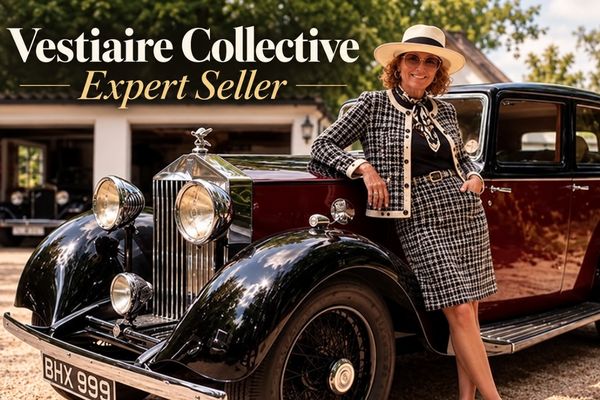
I have now reached Expert Seller status on Vestiaire Collective, and the statistics behind my account are something I am particularly proud of:
5 out of 5 successful sales.
100% description accuracy.
100% of my orders shipped within five days.
For me, those last two numbers are more important than the badge itself.
Because selling pre-loved luxury isn’t merely about owning something with Chanel, Cartier, Prada, Bottega Veneta, Mulberry or Louis Vuitton stamped onto it.
It is about trust.
What Is A Vestiaire Collective Expert Seller?
Vestiaire Collective awards its Expert Seller badge automatically according to seller performance.
At the time of writing, Vestiaire says an Expert Seller must have sold at least five items during the previous six months, shipped at least 90% of sold items within five days, had at least 90% of those items fully match their descriptions, and sold only authentic items.
Vestiaire also says Expert Seller items receive increased visibility in search, the badge appears on listings and profiles, and qualifying items can receive exposure through a dedicated area of the platform.
But forget algorithms for a moment.
For me, the interesting part is what those numbers reveal about how you should actually sell luxury fashion.
The Secret? Describe The Bad Bits
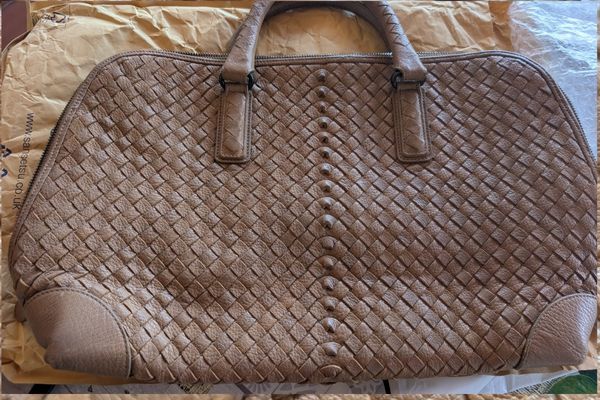
Anyone can photograph the beautiful part of a handbag.
Show me the leather gleaming in Mediterranean sunshine, position the logo perfectly, add a pair of sunglasses and suddenly everything looks fabulous.
But that isn’t how I sell.
If there is a scratch, I tell you there is a scratch.
If the corners show wear, photograph the corners.
If the interior has a mark, show the mark.
If there is tarnishing on the hardware, don’t strategically position the clasp so nobody can see it.
This is where I think many private sellers make their biggest mistake.
They worry that mentioning imperfections will make an item harder to sell.
I believe the opposite.
I would rather lose a buyer before the sale than disappoint them after the sale.
Pre-loved means pre-loved.
A thirty-year-old handbag should not necessarily look as though it left the boutique yesterday.
In fact, I often find the patina, construction, hardware and leather on older luxury pieces far more interesting than something brand new.
But condition determines value.
And buyers deserve to know exactly what they’re buying.
That attitude is probably reflected in the statistic I’m happiest about:
100% description accuracy.
Never Let Your Photographs Tell A Different Story From Your Description
Photography is everything when selling luxury online.
I want close-ups.
I want the corners.
I want the handles.
I want the zip.
I want the hardware.
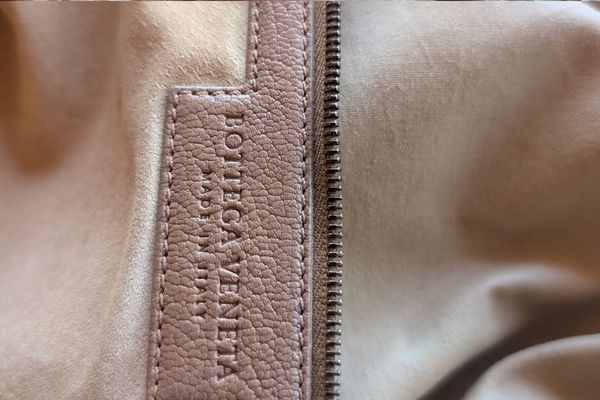
I want the lining.
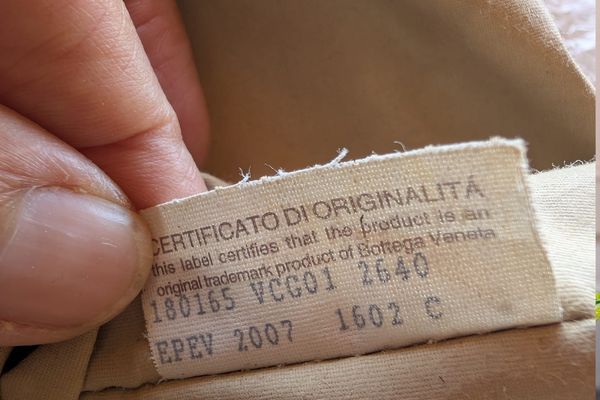
I want the serial numbers or identifying details where appropriate.
And please show me the inside of the bag.
I am amazed by listings asking serious money for luxury handbags while providing four photographs taken from almost exactly the same angle.
When I’m buying vintage myself, the photographs I study most closely often aren’t the glamorous ones.
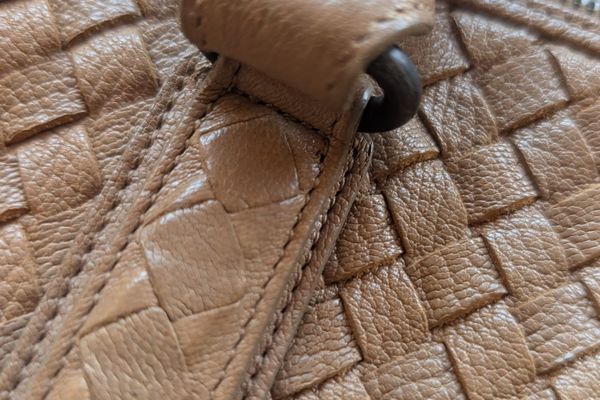
I zoom in on the stitching.
I look at where leather folds.
I look at the base.
I study the hardware.
I look for cracking, discolouration, previous repairs and anything suggesting the item has had a harder life than the description admits.
That same scrutiny should be applied when you’re the seller.
If you know what you would want to see as a buyer, show it before the buyer has to ask.
Luxury Resale Has Made Me Look At Fashion Differently
The resale market has also changed how I judge luxury.
Price does not necessarily equal quality.
And a famous name does not guarantee that something will age beautifully.
When I handle an older designer bag, I look at its leather, stitching, hardware, lining and construction.
Some vintage pieces make me wonder how anyone could ever have thrown them away.
Others make me wonder why somebody paid so much for them in the first place.
That is part of the fun.
When you start buying pre-loved luxury, you also stop looking only at the current season.
Suddenly fashion isn’t confined to what a creative director decided we should buy this year.
You have decades to choose from.
The 1970s.
The 1980s.
The wonderfully excessive 1990s.
The early 2000s.
Collections that disappeared.
Designers who moved houses.
Logos that changed.
Leathers that aren’t used anymore.
Hardware that feels like it belongs on a vintage Mercedes rather than a handbag.
That is why I increasingly love the hunt.
Don’t Become Emotionally Attached To The Asking Price
Now we come to money.
Selling platforms are fascinating because you quickly discover the difference between what somebody thinks an item is worth and what somebody is actually prepared to pay for it.
Those are two very different figures.
You can list your handbag for €1,000.
That doesn’t make it a €1,000 handbag.
The market decides.
I look at comparable bags, condition, colour, age, rarity and what else buyers can currently find.
Then there is negotiation.
Offers are part of resale.
Some are sensible.
Some are optimistic.
And occasionally somebody sends you an offer so low that you wonder whether they accidentally left a zero off the end.
Don’t take it personally.
A handbag isn’t insulted by an offer.
You can decline it.
You can counter it.
Or, sometimes, you realise the buyer has actually identified the real market price more accurately than you have.
Knowing when to say yes is just as important as knowing when to say no.
Buy Condition, Not Just The Logo
This is perhaps my biggest lesson as both buyer and seller.
A cheap luxury bag isn’t necessarily a bargain.
Restoration costs money.
Leather work costs money.
Replacement hardware can be difficult or impossible to find.
A badly damaged interior can turn what looked like an irresistible €150 purchase into something you wish you had left alone.
At the same time, cosmetic wear can create opportunities.
A bag with beautiful structure, excellent hardware and fundamentally good leather may only need careful cleaning or sympathetic restoration.
That is where knowledge becomes valuable.
You begin to distinguish between ageing and damage.
Between patina and neglect.
Between something that can be restored and something that will consume hours of your life and still never look right.
I am becoming far more selective.
There will always be another handbag.
Packaging Is Part Of Luxury
Once somebody has trusted you with their money, don’t throw their purchase into whatever cardboard box you happen to find.
It doesn’t need to resemble a Parisian flagship boutique.
But it should be clean, protected and thoughtfully packed.
Structure the handbag if necessary.
Protect the hardware.
Make sure straps aren’t crushed.
Use appropriate packaging around delicate leather.
And ship promptly.
My current Vestiaire statistics show 100% of orders shipped within five days.
Personally, I don’t see fast dispatch simply as a way of satisfying a platform metric.
Someone has bought something from me.
They are excited.
I want it on its way.
Authentication Is Changing The Second-Hand Market
The enormous growth of luxury resale has inevitably created another issue: authenticity.
The better counterfeit goods become, the more important provenance, knowledge and authentication become.
It is one reason experienced buyers look beyond a logo.
Fonts, stitching, dimensions, materials, date codes, serial systems, hardware, construction and even the way leather ages can tell a story.
But nobody knows everything.
I certainly don’t pretend to.
If I’m uncertain about an item, I’d rather investigate further than convince myself something must be genuine because I desperately want the bargain.
That applies even more strongly when selling.
Your reputation is worth considerably more than making money from one handbag.
Would I Recommend Selling On Vestiaire Collective?
For luxury fashion, yes, I understand its appeal.
You have access to an international audience already looking for designer fashion, and established seller badges can help buyers distinguish sellers with a track record. Vestiaire says its Expert Seller badge is specifically intended to reward reliable sellers and increase their visibility.
But a platform cannot make you a good seller.
You still have to do the work.
Photograph properly.
Research properly.
Describe properly.
Price realistically.
Answer questions.
Ship promptly.
And never conveniently forget to mention the scratch hiding underneath the handle.
My 100% Rule
If I had to reduce my experience so far to one rule, it would be this:
Make the buyer feel that the item they receive is as good as — or better than — the item they expected from your listing.
Not worse.
Never worse.
That is how trust is built.
The Expert Seller badge is lovely to have, and naturally I am pleased to have achieved it.
But 5/5 successful sales, 100% description accuracy and 100% shipping within five days mean more to me.
Those numbers tell me that the women and men buying from me received what I told them they were buying.
And in the world of pre-loved luxury, where a handbag may already have lived several lives before reaching its next owner, that trust is the real luxury.
My next experiment?
I want to see whether becoming an Expert Seller actually changes what happens next.
Will my listings receive more attention?
Will pieces sell faster?
Will buyers make stronger offers?
Will I become even more ruthless about what I buy in the first place?
I will keep you posted.
Because for me, this is becoming far more interesting than simply buying another handbag.
Luxury resale is becoming a hunt, an education and, occasionally, a very good deal.













You must be logged in to post a comment.