
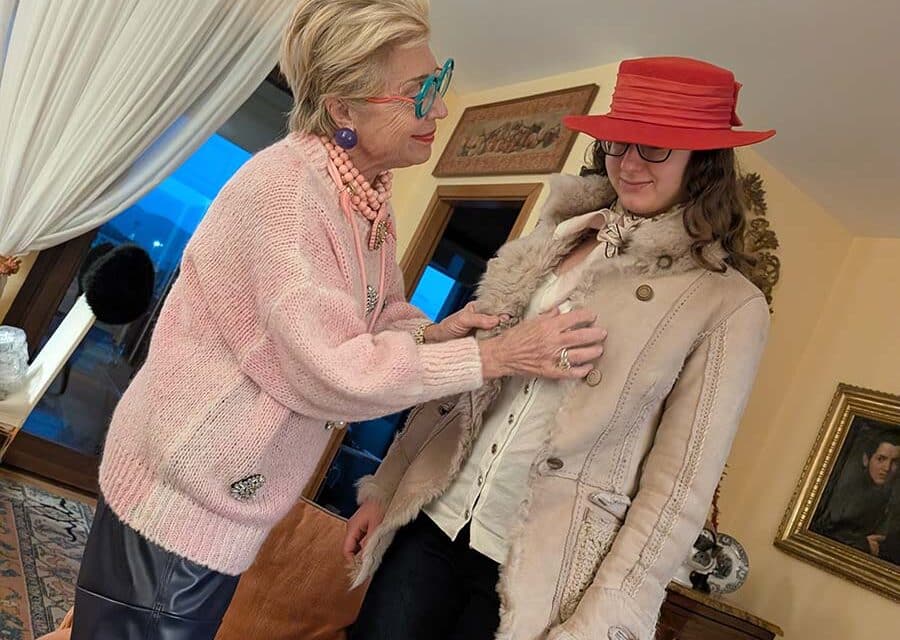
For the last two years, I have been telling Nonna Donata one thing: keep going.
Keep posting. Keep putting on the sunglasses. Keep opening that wardrobe. Keep showing people how an Italian woman of her generation dresses, speaks, cooks, entertains, laughs and lives.
I have repeatedly told her that one day I want to see her walking during Milan Fashion Week.
Then something happened in Milan this September that made me smile. Suddenly, women who look like Nonna Donata were not being hidden away from fashion. They were part of the fashion story.
At Vogue World Milano, the unmistakable “sciura milanese” appeared as part of the celebration of Milanese life. Italian model Marta Riello, an over-60 woman with magnificent silver hair, was among those portraying the elegant older Milanese woman. Vogue Italia specifically celebrated her as proof of beauty and style beyond 75.
And this is happening at exactly the same moment that the Italian Nonna aesthetic has exploded online.
So I have to ask: why now?
Why, after decades of fashion obsessing over youth, are we suddenly fascinated by the women it spent so long ignoring?
The Italian Nonna Was An Influencer Before Instagram Existed
The irony is delicious.
These women did not grow up trying to become influencers.
They were influencing all along.
They influenced their daughters, their granddaughters, their neighbours and entire families. They knew which butcher sold the best meat, which leather was worth buying, how linen should feel, when tomatoes were ready, how a woman should dress for church and what jewellery was appropriate for lunch.
They understood clothing because clothes had to last.
They understood handbags because a good leather bag might be carried for 30 years rather than one Instagram season.
They understood food because recipes were not downloaded. They were inherited.
They understood entertaining because people actually arrived at the house.
And now social media has discovered them.
Vogue Italia recently described the rise of the “Italian Grandma Aesthetic”, noting the fascination with printed midi dresses, linen shirts, scarves, traditional homes, market baskets and the everyday rituals associated with Italian grandmothers. British Vogue has documented the same phenomenon among Gen Z, with younger people embracing what would once have been dismissed as “dressing old.”
I find this fascinating.
Because younger women can buy the scarf.
They can buy the basket.
They can buy the vintage handbag.
But they cannot buy the life that created the woman wearing it.
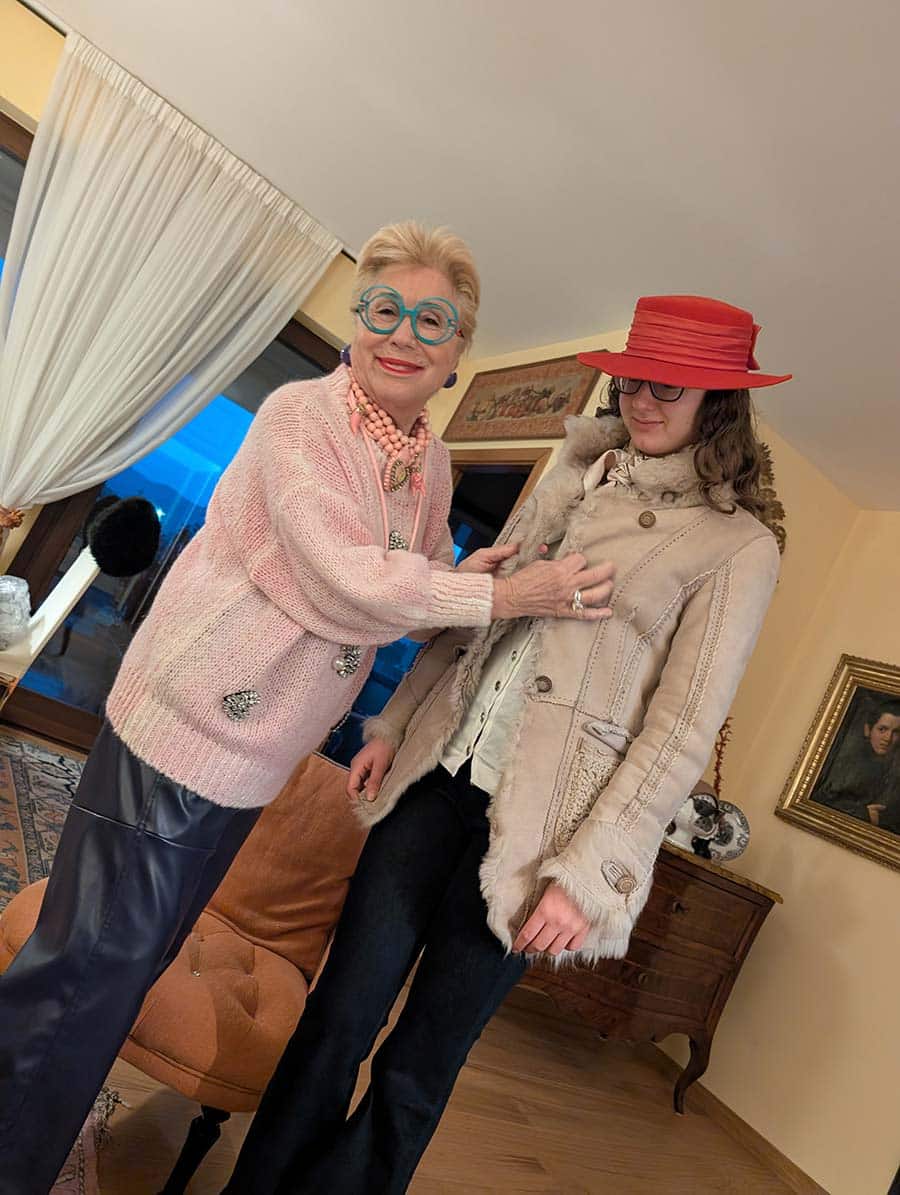
This Generation Is A Living Italian Archive
That is what makes women such as Nonna Donata so valuable.
They are not recreating an aesthetic.
They lived it.
There is an enormous difference.
This generation remembers an Italy before Zara, before Amazon, before globalised shopping and certainly before influencers received parcels every morning telling them what to wear.
Many learned to repair, alter and preserve clothes because replacing everything was neither normal nor economically possible.
They saw the rise of Made in Italy.
They watched towns change.
They remember local dressmakers, shoe shops, markets and family businesses that disappeared.
They know what a proper wool coat feels like because they wore one. They know old Italian leather because they carried it. They know how furniture, table linen and jewellery were passed between generations.
This culture can be referenced, photographed and romanticised, but it cannot truly be repeated because the economic and social world that produced it has changed.
That is why I call women like Nonna Donata living archives.
Fashion should be recording them now.
Social Media Has Become Exhausted With Perfection
There is another reason the nonnas are winning.
We are tired.
Perfect faces. Perfect kitchens. Perfect skin. Perfect holidays. Perfect beige houses.
Enough.
Then an 80-year-old Italian grandmother comes onto Instagram wearing enormous sunglasses, tells you exactly what she thinks and could not care less whether the algorithm approves.
Suddenly you stop scrolling.
That lack of performance has become incredibly powerful.
Nonna Luigina, for example, has attracted millions of followers across TikTok and Instagram simply through cooking, conversation and her relationship with her grandson. Asked about her popularity, her response was essentially that she was merely doing what any grandmother would do.
That is precisely why it works.
She isn’t trying to manufacture authenticity.
She is authentic.
The younger influencer spends hours attempting to produce content that looks spontaneous.
The nonna simply opens the door.
Even Milan Fashion Week Is Looking Back To The Family Wardrobe
What happened during this Milan Fashion Week was particularly interesting because the nonna influence moved beyond TikTok.
Dolce & Gabbana’s Spring/Summer 2027 show explicitly played with the idea of the family wardrobe passed between generations, including the grandmother’s clothes being worn by the granddaughter.
That tells us something important.
Heritage is becoming fashionable again.
Not fake heritage printed onto a sweatshirt.
Real inheritance.
The dress that belonged to someone.
The brooch with a story.
The handbag scratched because it accompanied a woman through 40 years of her life.
The scarf tied in a particular way because that was how her mother taught her.
Young fashion consumers have access to more clothes than any previous generation, yet many are fascinated by objects that have history.
Perhaps abundance has made history more desirable.
Fashion Finally Understands That Age Has Character
For too long fashion sold women a strange proposition: become interested in clothes at 18, spend money on fashion throughout your life and then disappear from the imagery when you become older.
It made absolutely no sense.
An older woman may have spent 50 years developing her taste.
Look at an Italian sciura walking through Milan.
She may wear the most conventional combination imaginable: coat, handbag, sunglasses, loafers.
Yet somehow you notice her immediately.
Why?
Because style has settled into her.
She isn’t experimenting with an identity she discovered yesterday.
She has edited herself over decades.
That confidence is extremely difficult to reproduce on a 20-year-old model.
The fascination with glamorous Milanese older women is not actually new. The Instagram account Sciuraglam was already attracting fashion attention years ago by documenting Milan’s impeccably dressed older women. British Vogue wrote about the phenomenon back in 2018.
What has changed is that the wider culture has finally caught up.
Nonna-Maxxing Is About More Than Clothes
There is even a name for another part of this movement: nonna-maxxing.
The Washington Post recently examined the phenomenon through Italian women in their late 80s and 90s whose ordinary routines — cooking from scratch, walking, gardening, spending time with friends and avoiding waste — have suddenly become lifestyle inspiration online.
Again, I smile at the absurdity.
These women didn’t need a wellness retreat to discover slow living.
They were already living it.
They didn’t call using leftovers “zero waste.”
It was simply stupid to throw good food away.
They didn’t call walking into town “low-impact exercise.”
They needed something from the shop.
And friendship wasn’t a wellness intervention.
Your friend came around for coffee.
Modern culture has created terminology for a lifestyle Italian women practised without hashtags.
My Tips For Older Women Who Want To Become Influencers
If Nonna Donata — or any woman of her generation — wants to grow on social media, I would never advise her to behave like a 25-year-old influencer.
I would tell her the exact opposite:
- Don’t modernise yourself for Instagram. Your difference is your advantage. Show your real home, wardrobe, recipes and routines.
- Wear the clothes you actually love. Vintage Gucci, eccentric glasses, an old coat, a scarf you have owned for 40 years — tell us the story.
- Talk. Your opinions are more interesting than another silent outfit reel. Tell younger people what things used to cost, where you bought them and why you kept them.
- Show your imperfections. Wrinkles are not a content problem. Neither is grey hair. They are evidence that you have lived.
- Teach something. Cooking, dressing, sewing, entertaining, marriage, friendship, jewellery, leather, markets — knowledge is content.
- Let younger generations into the conversation. Some of the strongest nonna accounts work because grandchildren ask questions and allow two generations to collide.
- Have a dream bigger than follower numbers. A campaign. A magazine shoot. A book. And yes, perhaps even walking at Milan Fashion Week.
Nonna Donata, Keep Going
So my message to Nonna Donata remains exactly what it has been for the last two years.
Keep going.
Do not think you arrived too late to social media.
Social media may simply have taken too long to arrive at you.
Because right now, fashion is looking for heritage, personality, eccentricity and authenticity — all the things women of this generation already possess.
And when I saw those older women being celebrated in Milan, I thought immediately of Donata.
One day I still want to see her walking that runway.
Not dressed up to imitate a 25-year-old.
Not transformed into somebody else’s idea of fashionable.
But walking as herself: Italian, eccentric, experienced, beautifully overdressed and carrying decades of culture with her.
Because the most interesting thing about the rise of the Italian nonna is not that old women are suddenly fashionable.
It is that the rest of fashion has finally started paying attention.









You must be logged in to post a comment.